
Reviewed · SAMURAI & NINJA EXPERIENCES
Seki: Samurai Knife Making Experience at the Knife Museum
Sharp memories last. In Seki, Japan’s famous blade-making city, you polish, sharpen, assemble, and mark your own Damascus kitchen knife under the guidance of veteran craftsman Sumi and his team. I especially like the hands-on work and the chance to test the finished blade on fresh vegetables, rather than simply watching a demonstration.
I also like the human side of the day. Guide Hiro handles transport and translation with care, while Sumi and Yoshi patiently teach the craft. The main consideration is time: the knife work can take much longer than the advertised 2.5 hours, so this is a full, leisurely day rather than a quick workshop.
In This Review
- Key Points Worth Knowing
- Why Seki Makes Sense for a Blade-Making Day
- Starting at Sekitomioka Station with Hiro
- Choosing and Personalizing Your Knife
- The Moment Your Knife Meets a Vegetable
- Lunch with Local Japanese Cooking
- G.SAKAI Knife Museum: More Collection Than Conventional Museum
- Seki Swordsmith Museum and the Samurai Connection
- Is the $322 Price Good Value?
- Who Will Enjoy This Day Most?
- Practical Advice Before You Book
- Should You Book the Seki Knife Experience?
- FAQ
- Where does the experience begin?
- How long does the experience last?
- What kind of knife will I make?
- Can I put my name on the knife?
- What skills will I learn?
- Is lunch included?
- Is transportation included?
- Can children join the experience?
Key Points Worth Knowing
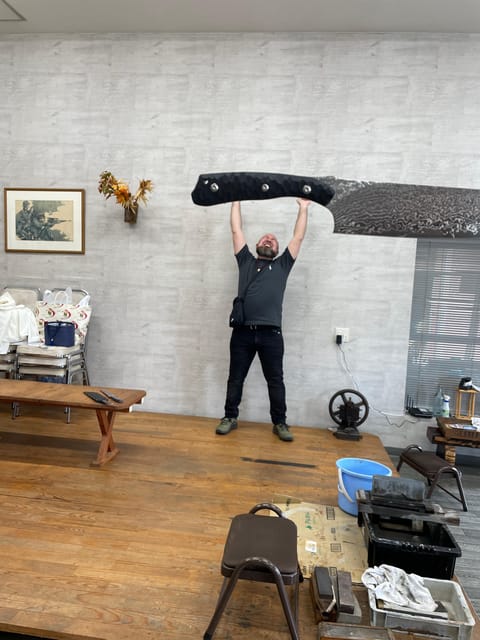
- You make a useful Damascus kitchen knife: Polish, sharpen, assemble, and add your name in Japanese characters.
- Sumi brings more than 50 years of knife-making experience: His calm instruction gives the workshop real weight.
- The small group is limited to five people: You get close help at each stage instead of being lost in a crowd.
- Fresh vegetables reveal the finished knife’s performance: This is the satisfying moment when your work becomes a working kitchen tool.
- Lunch is part of the experience: Depending on the arrangement, you may enjoy sushi prepared by a long-serving sushi master or another local Japanese meal.
- The day connects knives with samurai swords: The G.SAKAI Knife Museum and Seki Swordsmith Museum give the workshop a wider cultural setting.
Why Seki Makes Sense for a Blade-Making Day
Seki City sits in Gifu Prefecture, in central Honshu, and has made blades since the Kamakura period, from 1185 to 1333. The area had the ingredients traditional smiths needed: iron sand, charcoal, and clean water.
That old craft has adapted to modern life. Seki now produces kitchen knives used by professional cooks and home chefs around the world. The city still honors its sword and cutlery past through museums, workshops, and annual events.
For you, that setting matters. This is not a generic craft class placed in a convenient shopping district. You are visiting a city whose identity is tied to blades. The experience takes place at the G.SAKAI factory, one of Japan’s best-known knife makers, with the museum located within part of the factory complex.
Getting there takes some planning. The meeting point is Sekitomioka Station on the Nagaragawa Railway, with pickup timed for the train arriving at 10:06 AM. From Kyoto, the trip takes roughly 1.5 to 2 hours by train, making this possible as a day trip, though you should allow plenty of time for the return journey.
More Samurai & Ninja Experiences in Takayama
- Ninja Experience in Takayama – Basic Course
★ 5.0 · 62 reviews - Ninja Experience in Takayama – Basic Course
★ 4.6 · 59 reviews - Knife Making Experience in Samurai Sword Town
★ 5.0 · 29 reviews
Starting at Sekitomioka Station with Hiro
Your day begins at Sekitomioka Station, where the guide picks you up by car. This transfer is more important than it may sound. Seki’s blade sites are spread out, and reaching them without a local escort would be awkward.
Hiro has earned particular praise for making the day easy. He translates between English and Japanese, answers questions, takes photographs and videos during the workshop, and handles the driving. Some participants have also been dropped at Gifu Station at the end, which can make the return trip to Nagoya or Kyoto simpler, though you should confirm your final drop-off arrangements before booking.
The tour uses a small group of no more than five people. That is a strong fit for a practical workshop. You can ask questions without holding up a large class, and the instructors have time to help with the small movements that make polishing and sharpening work properly.
Choosing and Personalizing Your Knife
At the workshop, you select from the available knife styles and handles. The choice can be first come, first served, so arriving on time matters if you have your heart set on a particular color or shape.
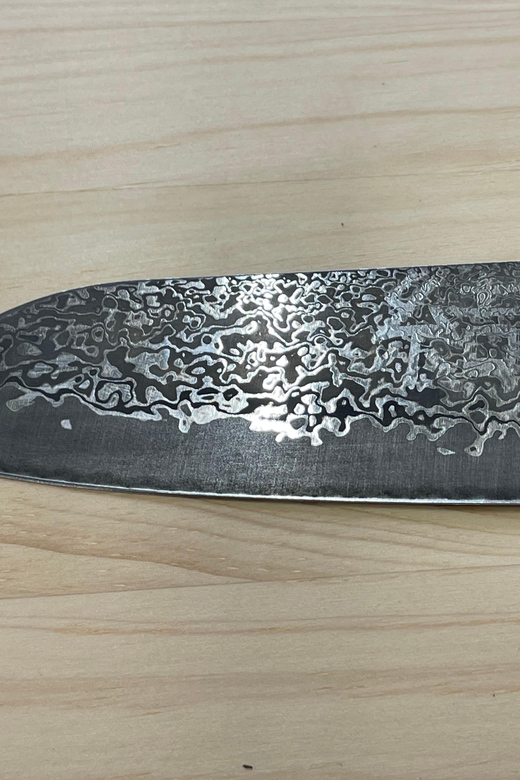
The knife is made from a prepared blank rather than forged from raw metal during your visit. That is worth understanding before you go. You are not spending the day heating steel and hammering out a blade. Instead, you take part in the skilled finishing and assembly stages that turn a factory-made blank into a personal working knife.
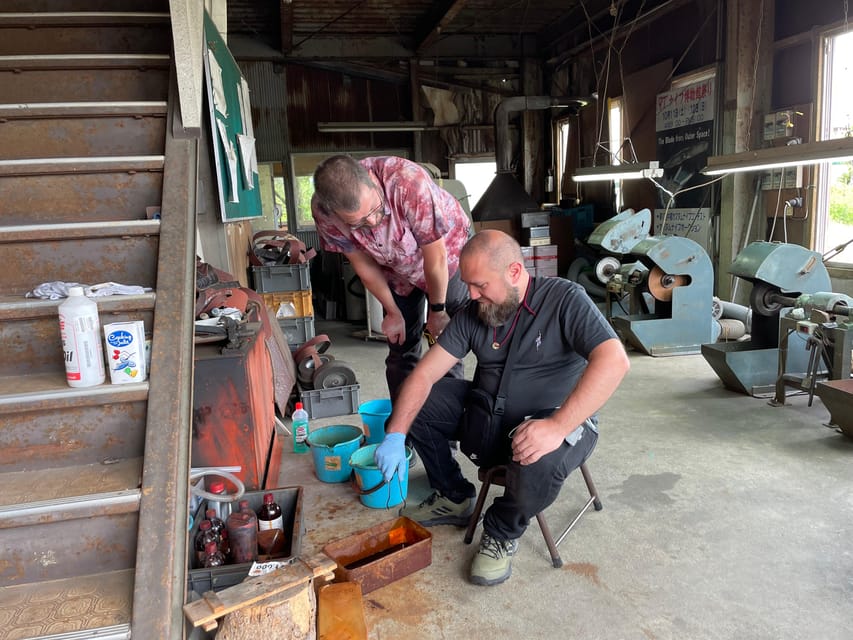
That process includes polishing, engraving, fitting the components, and sharpening. Sumi and Yoshi guide your hands through each part. The teaching is patient and encouraging, and the small class allows the staff to give individual help.
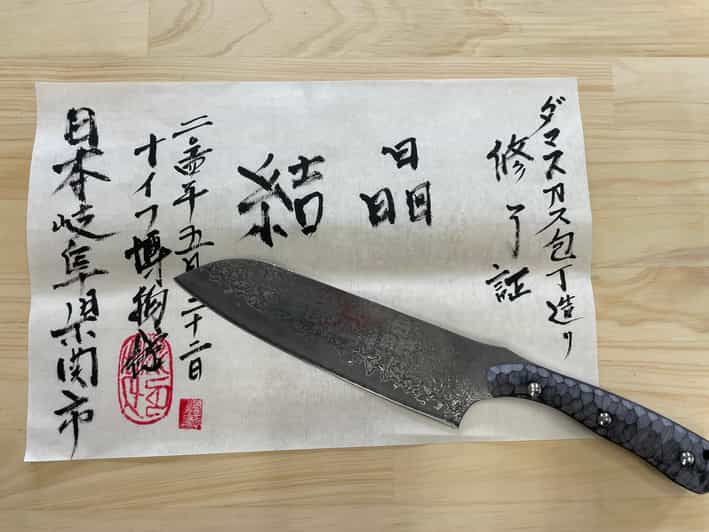
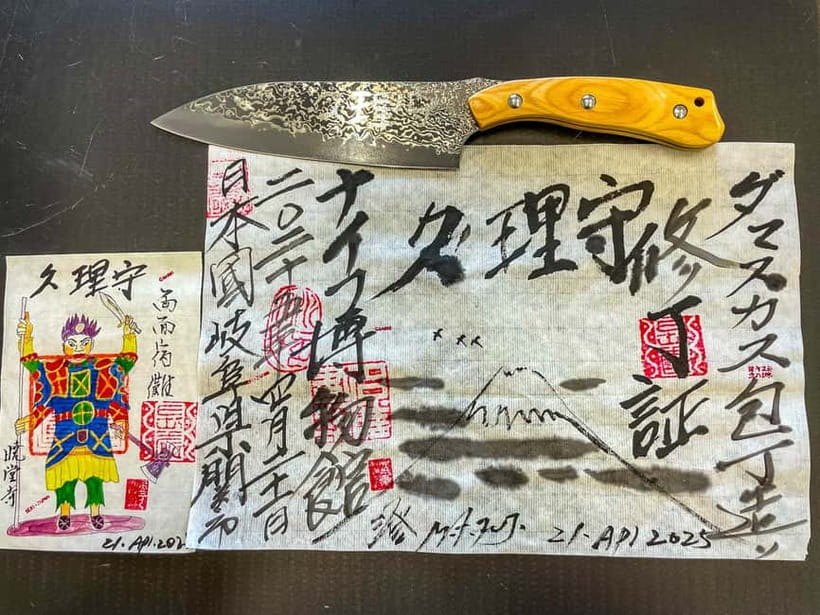
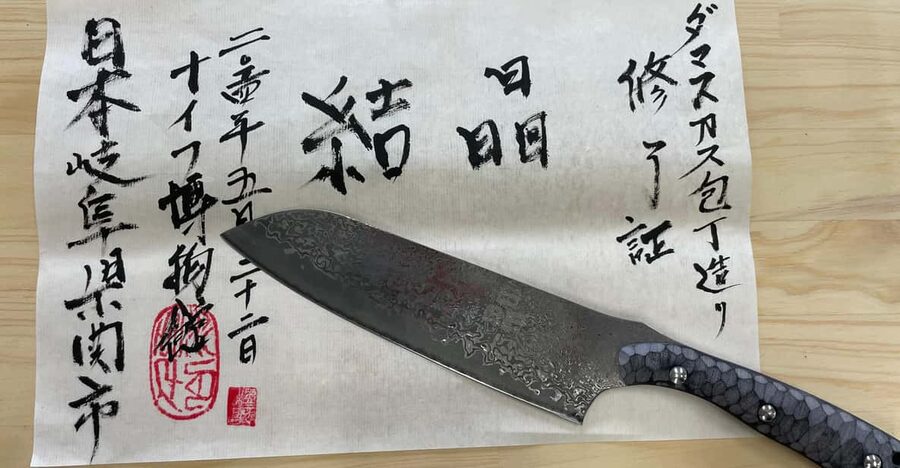
One especially personal touch is adding your name to the blade. The team can help translate your name into kanji or kana, then show you how to mark it using the workshop’s special technique. You leave with a knife that carries your name and your own choices, not just a product selected from a store shelf.
Several people found the sharpening lesson especially useful because the technique applies to other knives at home. That makes the workshop more valuable than a one-time souvenir activity. You gain a basic skill you can use on your own kitchen knives, and perhaps on a friend’s or family member’s knife as well.
The Moment Your Knife Meets a Vegetable
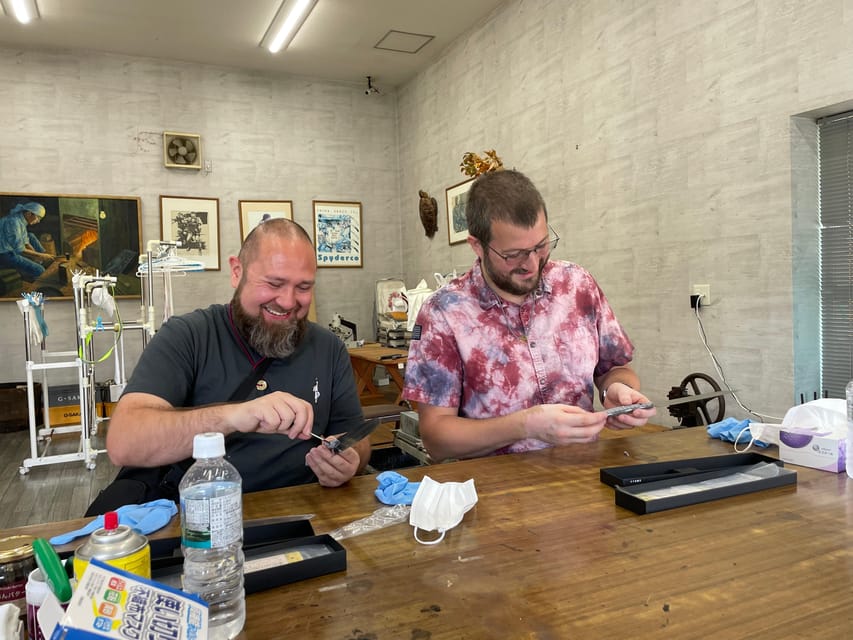
After the finishing work, you test the knife by cutting fresh local vegetables. This is a simple but effective part of the program. You feel the blade move through food, see how the edge performs, and understand why Seki knives have such a strong reputation.
Some participants also tried cutting a water bottle, but vegetable testing is the stated part of the experience. Do not expect a staged action show. The reward is subtler: a knife you polished and sharpened yourself suddenly works like a serious kitchen tool.
The workshop can run long. One family arrived around 11 and did not leave the shop until about 4 PM, while another participant warned that the making process may exceed the listed schedule. That is not necessarily a problem, but it affects the rest of your day. Keep your afternoon flexible, and do not schedule a tight train connection immediately after the tour.
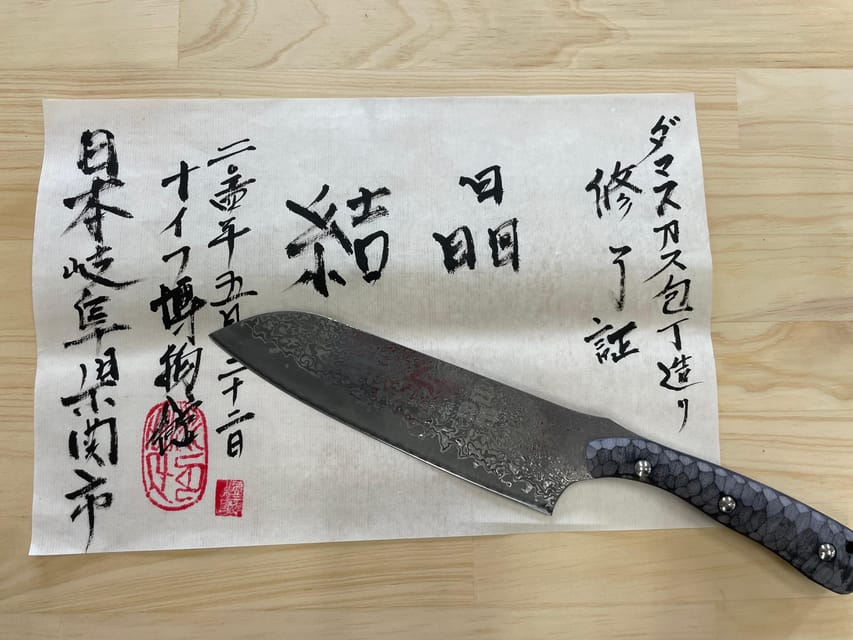
You receive a samurai-style kitchen knife set, a certificate, and a limited-edition mini knife gift. Some participants also received items such as a chopping board, key rings, or a small sumi-e artwork, but those extras should be treated as pleasant surprises rather than guaranteed inclusions.
A completely different kind of day out in Takayama:
- Kanazawa: World Heritage Shirakawa-go Morning Guided Tour
★ 4.9 · 988 reviews - Kanazawa: World Heritage Shirakawa-go & Two Local Experience
★ 4.9 · 274 reviews - Kanazawa/Takayama: Shirakawago & Takayama Private Day Tour
★ 4.8 · 172 reviews - Departing from Takayama [Regular sightseeing bus] World Heritage Sites Shirakawago and Gokayama Ainokura
★ 4.5 · 137 reviews
Lunch with Local Japanese Cooking
After the workshop, the group goes to a local restaurant for lunch. The meal is not an afterthought. It gives you a chance to sit down, talk with the guide and instructors, and use the new knife experience as a bridge into Japanese food culture.
Sushi received the strongest praise, including meals prepared by a sushi master with more than 20 years of experience. Other meals included eel, and the exact choice may depend on the restaurant arrangement. The meal information promises authentic Japanese cuisine, while specific menu choices can vary.
I like this pairing of craft and food. A knife makes more sense when you see it in the context of Japanese cooking. You have just spent hours shaping an edge, then you sit down to appreciate the careful preparation of the food it is designed to cut.
If you have dietary restrictions, ask about the lunch before booking. The supplied details do not list alternate menus or allergy arrangements.
G.SAKAI Knife Museum: More Collection Than Conventional Museum
The Knife Museum sits within part of the G.SAKAI factory. You can see unusual and rare knives, learn about the development of Japanese cutlery, and browse a large shop with everything from small pocket knives to kitchen and hunting knives.
The name may set a particular expectation. One participant felt it was not a conventional museum, and that is a fair point. The site combines factory, collection, retail space, and workshop. You should expect a working knife center with museum displays, not a large institution filled with long galleries and formal exhibits.
That mixed character is also its strength. You are seeing knives in the place where they are made and sold. After creating your own, the wider collection helps you compare different forms, uses, and levels of finish.
The shop may tempt you to buy another knife. Give yourself time to look, but remember that your handmade knife is already included in the price. The value of the visit is not simply the chance to shop. It is the chance to understand where your knife fits within Seki’s larger cutlery tradition.
Seki Swordsmith Museum and the Samurai Connection
The final cultural stop is the Seki Swordsmith Museum, where you learn about Japanese samurai swords and the city’s role in sword production.
The tour may also include an artisan katana showroom or sword-making site. There, you can ask questions of a katana specialist and see swords sent from around the world for repair and adjustment. Access to actual swords and close discussion with a craft expert gives the final part of the day a strong sense of place.
This visit helps prevent the knife workshop from feeling like an isolated activity. Japanese kitchen knives and samurai swords are not identical products, but both belong to a wider culture of metalwork, precision, maintenance, and respect for tools.
Do not expect to watch an entire katana being forged from start to finish during this one-hour visit. The focus is on learning about the craft, viewing the setting and collection, and understanding Seki’s sword-making past.
Is the $322 Price Good Value?
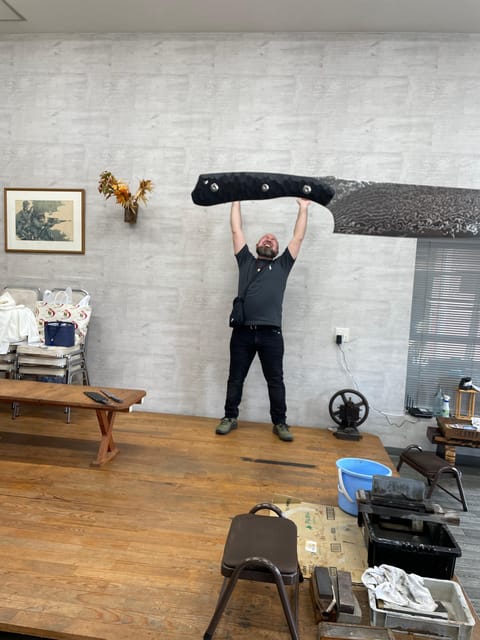
At $322 per person, this is a costly day by Japanese sightseeing standards. You should not compare it with a simple museum ticket or a standard cooking class.
The price includes the knife set, lunch, museum admission, transport during the day, an English-speaking guide, and an instructor for the workshop. The group is capped at five, and the guide’s driving and translation solve a real transport problem in a spread-out regional city.
The handmade knife is the main value. You are not only buying a blade. You are paying for instruction, personalization, sharpening practice, time with experienced craftspeople, a local meal, and access to places that would be harder to visit independently.
For a person who only wants a cheap souvenir, the price will feel high. You can buy a Seki knife elsewhere for less. For someone who values making a tool, learning how to maintain it, and taking home a personal object tied to a specific Japanese city, the cost is easier to justify.
The experience also works especially well as a special occasion during a longer Japan trip. It has enough substance to become a day you remember, rather than another stop where you take photographs and move on.
Who Will Enjoy This Day Most?
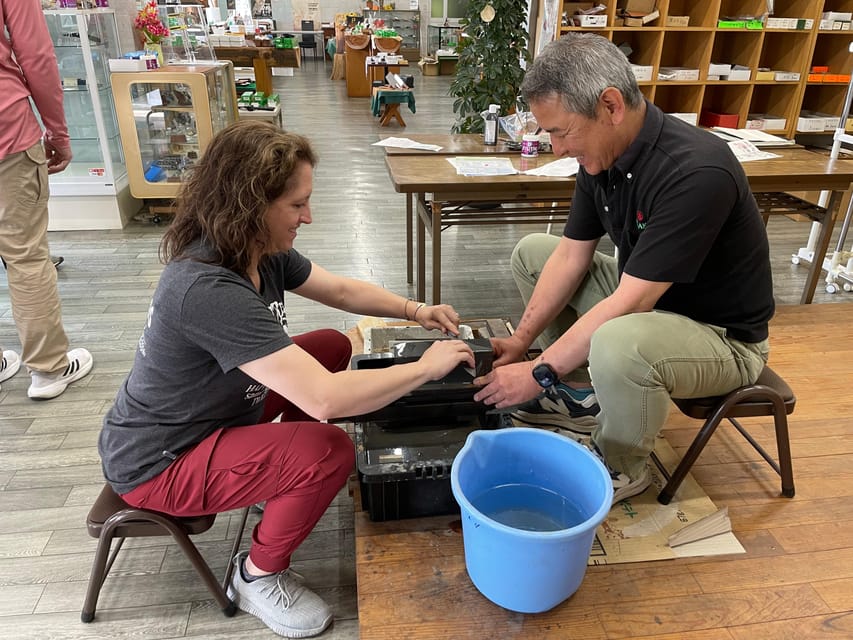
I would recommend it most strongly to adults who like cooking, Japanese craftsmanship, history, or hands-on activities. Food lovers get the lunch and the chance to test a kitchen blade. People interested in samurai culture get the sword museum and katana connection. Makers get a real process to follow.
Couples and small family groups can enjoy it together, but children under 18 are not permitted. Since the group is small, it also suits people who prefer a quiet, personal class over a large demonstration.
You should be comfortable with a full day of focused hand work. Polishing and sharpening are rewarding, but they are not fast. If you want a relaxed schedule, this is a good choice. If you want several major sights in one day, the workshop may feel too long.
The experience is offered in English and Japanese. Hiro’s translation is an important part of the day, especially when discussing kanji, sharpening, and technical details.
Practical Advice Before You Book
Meet at Sekitomioka Station at 10:06 AM, timed with the arrival of the Nagaragawa Railway train. Build your day around that meeting time rather than assuming you can arrive whenever you like.
Wear clothes and shoes suitable for a workshop. The provided information does not list a dress code, but you will be handling tools and working through several stages of knife finishing. A small group means you may receive close assistance, but you still need to follow safety instructions carefully.
Plan for the possibility that the knife session runs past its stated 2.5 hours. The complete day is listed as one day, with lunch taking about an hour and the sword museum visit about an hour, but exact timing can stretch.
The activity offers free cancellation up to 24 hours before the start time, and you can reserve now while paying later. Availability and starting times should still be checked for your date.
Should You Book the Seki Knife Experience?
Book it if you want a useful souvenir with a personal story, not just another purchase. The strongest parts are the patient instruction from Sumi and Yoshi, Hiro’s careful guiding and translation, the name engraved on your blade, and the moment you test your own sharpening on fresh vegetables.
I would skip it if $322 feels too high for a knife-making day, if you dislike long workshops, or if your Japan schedule cannot spare a full day outside the major cities. For everyone else, especially cooks and craft lovers, this is a thoughtful way to meet Seki through its tools, food, and sword culture.
FAQ
Where does the experience begin?
It begins at Sekitomioka Station on the Nagaragawa Railway. The meeting time is 10:06 AM, when the train arrives, and the driver picks you up by car.
How long does the experience last?
It is a full-day experience. The knife workshop is listed at about 2.5 hours, lunch takes about one hour, and the Seki Swordsmith Museum visit takes about one hour. The knife-making portion may run longer than the stated schedule.
What kind of knife will I make?
You make a personalized Damascus kitchen knife, described as a samurai-style kitchen knife. Available shapes and handle colors may vary, and selection can be first come, first served.
Can I put my name on the knife?
Yes. The staff can help translate your name into kanji or kana, and you can add it to the blade using the workshop’s special technique.
What skills will I learn?
You learn how to polish, assemble, and sharpen the knife. The sharpening technique can also be used later on other knives.
Is lunch included?
Yes. Lunch is included, and it is an authentic Japanese meal at a local restaurant. Sushi and eel have been served, but the exact meal selection can vary.
Is transportation included?
Yes. Transportation during the experience is included, beginning with pickup at Sekitomioka Station. English and Japanese guiding are available.
Can children join the experience?
No. The activity is not suitable for children under 18.
More Museum Visits
- Tokyo: teamLab Planets TOKYO Digital Art Museum Entry Ticket
★ 4.6 · 9,779 reviews - Osaka Castle: Museum and Tower Entry Ticket
★ 4.5 · 2,380 reviews - Tokyo: Samurai Ninja Museum Guided tour and Experience
★ 4.6 · 1,010 reviews - Kyoto: Tea Museum Tickets and Matcha Grinding Experience
★ 4.9 · 739 reviews
More Craft Workshops
- Tokyo Shinjuku Chopsticks Making Class
★ 5.0 · 1,763 reviews - Kyoto : Chopsticks Making Workshop in Gion with Engraving Option
★ 5.0 · 958 reviews - Kintsugi Experience: Art of Golden Joinery in Tokyo
★ 5.0 · 467 reviews - Authentic knife making experience at a blacksmith in Kyoto
★ 4.8 · 350 reviews
Just added around Takayama
- Magome & Tsumago Nakasendo Trail Day Hike with Government-Licensed Guide★ 5.0 · 38 reviews
- Japanese Cooking Class with Local Family in Takayama Old Town★ 5.0 · 40 reviews
- From Takayama: Shinhotaka Ropeway and Kamikochi tour★ 4.8 · 42 reviews
- Shuriken Experience in Takayama★ 5.0 · 46 reviews
- Shirakawa-go UNESCO Half-Day Tour from Takayama★ 4.6 · 47 reviews
- Hida Takayama, Shirakawa-go+Observatory|Day Trip from Nagoya★ 4.3 · 47 reviews
- Takayama Old Town Walking Tour with Local Guide★ 4.5 · 50 reviews
- Private group Local Food Tour in Takayama★ 5.0 · 59 reviews
Samurai & Ninja Experiences, compared.

Samurai Ninja Museum Guided tour and Experience
Read our review →
Kendo and Samurai Experience with Uniform and Gear
Read our review →
Samurai Sword Class by Experts in Traditional Arts
Read our review →
Skip the lines Basic Ticket at SAMURAI NINJA MUSEUM KYOTO
Read our review →
Samurai Sword & Archery Class from Samurai Descendant
Read our review →
Browse the lists this tour appears in