
Reviewed · HISTORICAL TOURS
Kyoto: Private 2.5 Hour Historical Walking Tour
Kyoto makes history feel close enough to touch. This private walk links Yasaka Shrine, a Zen temple, Yasaka Pagoda, and Kiyomizu Temple in a compact route through Gion, giving you both famous sights and quieter corners. I especially like the personal format and the way guides such as Hisako and Hiroko use hand-drawn maps, pictures, and notes to explain Japan’s religions, politics, art, and customs.
The tour also earns high marks for its gentle pace. You have time for photos, questions, and a pause in the calm of Entokuin’s garden instead of being hurried from one gate to the next. The main drawback is that temple admission fees are not included, and the route involves stairs and plenty of walking. The advertised duration also varies between two and two and a half hours, so check the start details before booking.
In This Review
- Key things to know before you book
- Starting at Yasaka Shrine’s red west gate
- Maruyama Park and Nene-no-michi
- Entokuin’s Zen gardens and traditional rooms
- Yasaka Koshindo and the five-storied pagoda
- Walking toward Kiyomizu Temple
- Kiyomizu Temple’s wooden stage and mountain views
- The guides make the history easier to follow
- Is $80 good value for a private group?
- Who will enjoy this Kyoto walk most?
- Should you book the Yasaka to Kiyomizu walk?
- FAQ
- Where does the Kyoto historical walking tour start?
- Where does the tour finish?
- How long does the tour last?
- What places are visited?
- Is the tour private?
- What language is the tour offered in?
- Are temple admission fees included?
- What should I bring?
Key things to know before you book
- A private group for up to five people: The $80 price is charged per group, not per person, making this especially good value for families or a small party.
- A useful introduction to Kyoto’s religions: You learn how to worship at a Shinto shrine and how to tell shrine customs from Buddhist temple traditions.
- Entokuin is the quiet center of the walk: Its dry gardens, traditional rooms, and sliding-door paintings offer a slower, more thoughtful stop.
- The guide’s visual aids add real value: Hisako and other guides have used hand-drawn maps, sketches, folders, and illustrated notes to make complex history easier to follow.
- The route finishes at Kiyomizu Temple: You see the wooden stage, Koyasu Pagoda, Buddhist statues, the Otowa water, and Jishu Shrine.
- Plan for extra costs and good footwear: Transportation, food, drinks, temple admissions, and insurance are separate.
Starting at Yasaka Shrine’s red west gate
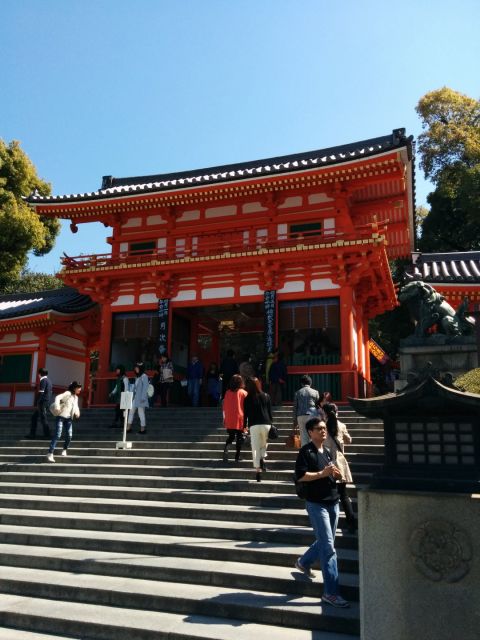
Your meeting point is the west gate, also called the red gate, of Yasaka Shrine. This is a sensible place to begin because the guide can give you a quick map-based outline of Kyoto before the walk gets busy with temples, lanes, and legends.
If you arrive by train, Gion Shijo Station on the Keihan Line and Kawaramachi Station on the Hankyu Line are the listed options. From either station, walk east along Shijo Street until you reach the stone steps and red gate. By bus, get off at the Gion stop, where the steps are beside the shrine entrance.
The guide first explains Kyoto’s place in Japanese history, then introduces Yasaka Shrine. You learn how to worship at a Shinto shrine, which is useful far beyond this single stop. Once you understand the basic customs, later visits around Japan become less confusing and more respectful.
This opening is one of the tour’s strongest features. Kyoto can present a lot of visual information at once: torii gates, lanterns, purification fountains, offerings, statues, and worshippers. A guide gives those details a framework instead of leaving you with a string of pretty photographs.
More History Tours in Kyoto
- Kyoto Gion: 2-Hour Geisha Culture & History Walking Tour
★ 5.0 · 1,186 reviews - Kyoto Gion Historical Walking Tour
★ 5.0 · 188 reviews - Historical Kyoto E-Bike Tour
★ 5.0 · 181 reviews
Maruyama Park and Nene-no-michi
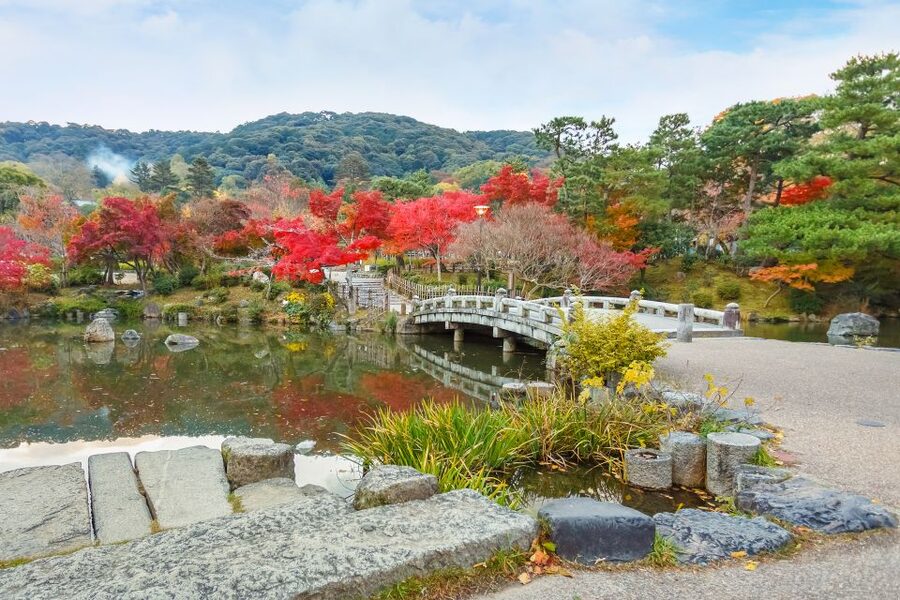
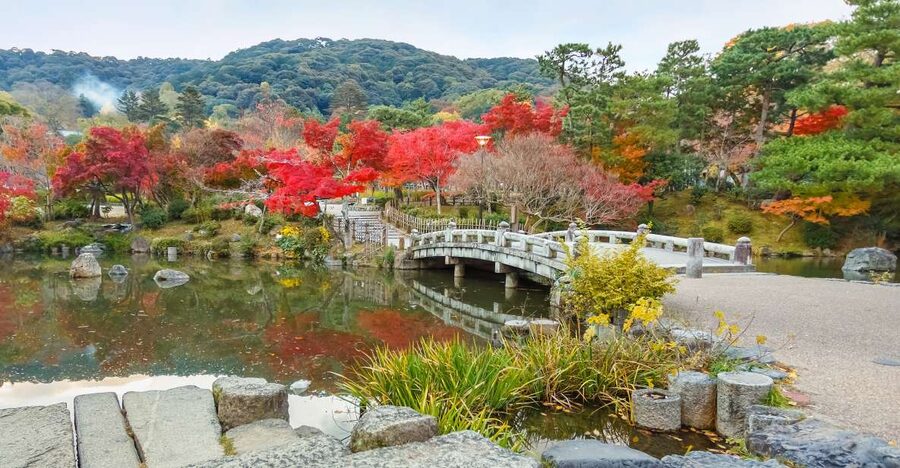
From Yasaka Shrine, you walk through Maruyama Park. The park connects the shrine area with the older lanes toward Kiyomizu Temple, and it gives the route a welcome change of pace after the shrine grounds.
The walk then reaches Nene-no-michi, a busy historic street named for Nene, the wife of Toyotomi Hideyoshi. Hideyoshi was a major political leader in Japan in the late 16th century, and Nene is closely linked with Entokuin, the next major stop.
This is where the tour begins to connect buildings with people. Instead of treating each temple as an isolated monument, the guide can show you how Kyoto’s religious sites also reflect political power, family ties, patronage, and social history.
The route is short enough to manage without feeling like an athletic event, but you should still wear comfortable shoes. Kyoto’s old districts are made for walking, and stone steps appear along the way. In warm, humid weather, the same route can feel much harder than the distance suggests.
Entokuin’s Zen gardens and traditional rooms
Entokuin is scheduled for about 40 minutes, making it the longest single stop before Kiyomizu Temple. That extra time matters. You are not simply stepping inside, taking a quick photo, and moving on.
This Zen temple is known for dry landscape gardens, traditional Japanese rooms, and paintings on sliding doors. The gardens use arranged stones, gravel, and carefully placed plants to suggest natural scenery without relying on a pond or stream. A guide can help you notice the design instead of treating it as a decorative courtyard.
I like this part of the route because it gives you a quieter counterpoint to the famous temples. Kiyomizu is grand and often crowded. Entokuin offers a chance to sit with the visual simplicity of a Zen setting and consider how Japanese rooms, gardens, and art work together.
The traditional rooms are important too. You see how the building frames the garden and how sliding doors serve as both architecture and artwork. One booking included a calligraphy experience, but that should not be treated as guaranteed for every departure. The confirmed core of the visit is the temple, its rooms, gardens, and art.
Several guides have used their own drawings and folders here and at other stops. Hisako is especially praised for watercolor and colored-pencil illustrations, while other guides have brought carefully prepared notes and maps. This approach works well if Japanese religious terms and historical names are new to you.
The only caution is that a formal history lesson may not suit everyone. If you want a quick photo walk with minimal explanation, the guide’s detailed approach could feel slow. If you want to understand what you are seeing, the time is well spent.
Yasaka Koshindo and the five-storied pagoda
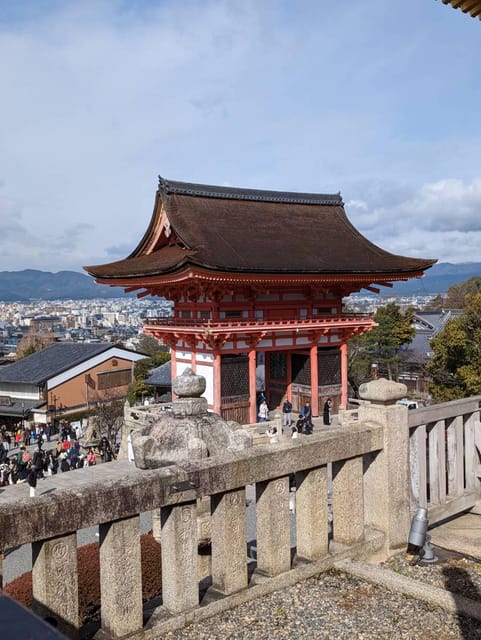
After Entokuin, the route continues on foot to Yasaka Koshindo, with about 15 minutes set aside for the visit. This temple is associated with colorful small objects and local religious practice, but the provided tour details focus mainly on its location near Yasaka-no-to.
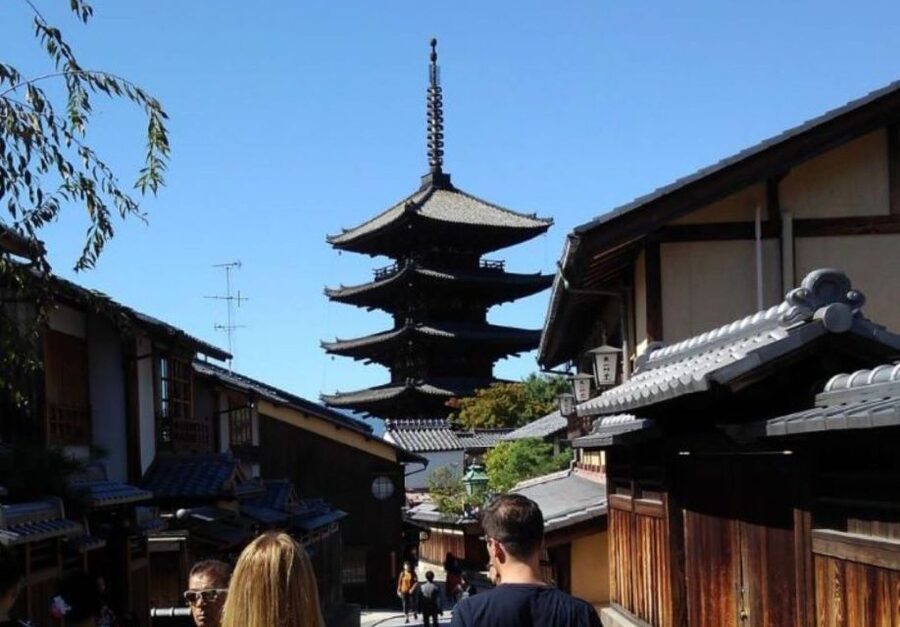
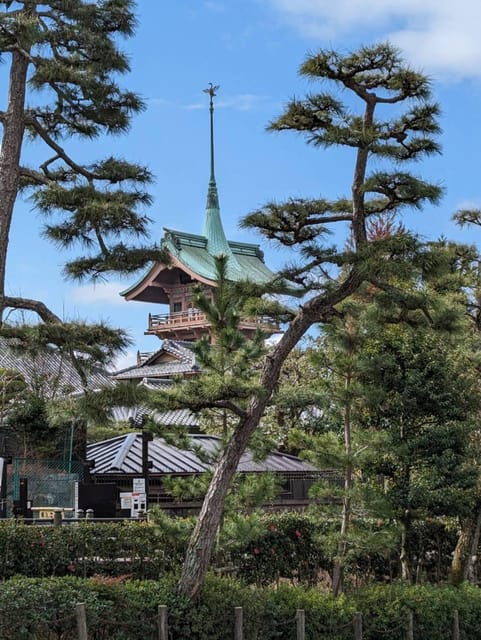
Yasaka-no-to is the five-storied pagoda that appears in many photographs of this part of Kyoto. You see it from outside rather than entering the pagoda. That distinction matters if you are expecting an interior visit.
The pagoda is also called Yasaka-no-to, and the nearby street provides a well-known photo point. Your guide can help place the view in context, explaining why the pagoda matters within the old Gion and Higashiyama setting. You get the photograph, but you also learn what you are photographing.
The itinerary allows 10 minutes at a viewpoint before the final walk toward Kiyomizu Temple. That short pause is useful for pictures and for catching your breath. The tour does not try to turn every stop into a long lecture, which helps keep the outing moving.
More Walking Tours in Kyoto
- Kyoto Geisha Walking Tour: Gion District & Hidden Gems
★ 4.7 · 3,273 reviews - Kyoto: Gion Magical Night Walking Tour with Geisha Trivia
★ 4.9 · 2,393 reviews - Kyoto: Gion Geisha District Walking Tour – Stories of Geisha
★ 4.7 · 2,187 reviews - Night Walk in Gion: Kyoto’s Geisha District
★ 4.5 · 2,003 reviews
Walking toward Kiyomizu Temple
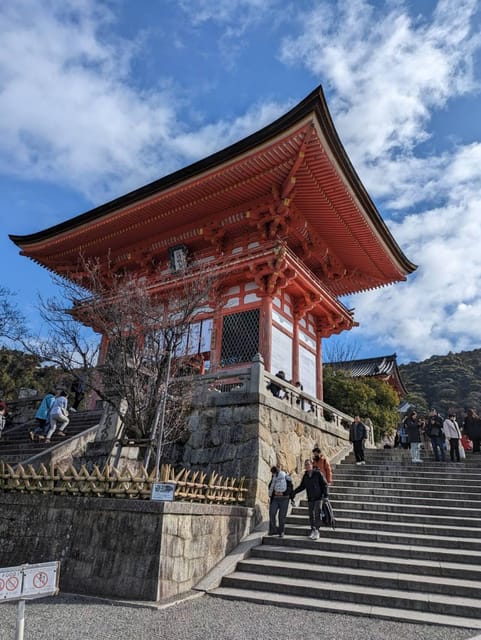
The walk from the pagoda area to Kiyomizu Temple takes about 15 minutes according to the planned route. This section brings you into one of Kyoto’s best-known historic districts, where narrow streets lead uphill toward the temple precinct.
Expect a route with stairs and an incline. The tour is not described as accessible, and comfortable shoes are specifically recommended. You may also want water, since drinks are not included and the combination of walking, stairs, and seasonal humidity can be tiring.
The route’s private format helps here. Guides have adjusted the pace for photographs, questions, and rest stops. One guide was praised for keeping the group on schedule without rushing anyone, while another arranged an extra-long experience after the conversation became especially engaging. The planned tour remains short, but the private setting can allow some flexibility.
Transportation to the starting point is your responsibility. The route ends at Kiyomizu Temple, so you do not return to Yasaka Shrine. That one-way design is efficient if you plan to continue exploring Higashiyama afterward.
Kiyomizu Temple’s wooden stage and mountain views
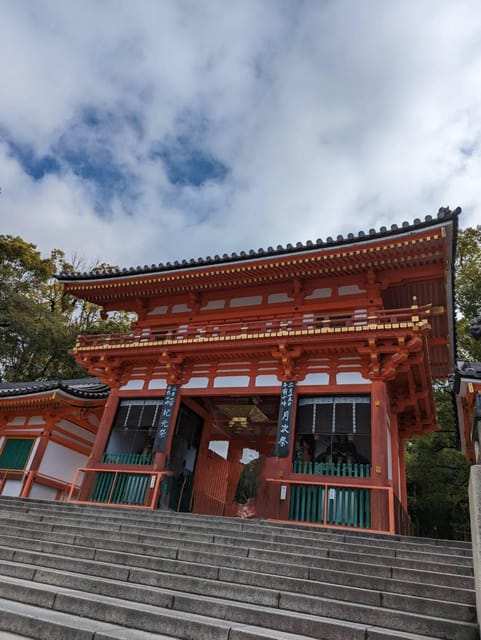
Kiyomizu Temple is the grand finish, with about 35 minutes scheduled for the main visit. The temple was originally built in the eighth century and receives about five million visitors a year. Those numbers explain why it is so popular, but they also warn you to expect a busy setting.
The main object of worship is Kannon Bodhisattva, and you can see Buddhist statues including Kannon. The guide explains the religious meaning behind the buildings rather than presenting the temple as a single scenic viewpoint.
The best-known feature is the wooden stage attached to the main hall. It was built without nails, an impressive example of traditional construction. From the stage, you can look across the surrounding scenery and see the three-storied Koyasu Pagoda.
Koyasu means easy birth, and women visit the pagoda to pray for a safe delivery. This detail gives the view a human purpose. It also shows how Japanese religious sites often bring together architecture, faith, daily hopes, and long-standing custom.
Kiyomizu means pure water. A stream from the mountain behind the temple has never dried up, and many people line up to drink from it. The line can take time, so do not expect this to be a quick add-on if you want to participate.
The precincts also contain an iron stick and iron clogs donated to the temple. The iron stick is very heavy, and you may try to lift it. Small details like this make the visit more memorable because they turn a passive sightseeing stop into something you can physically investigate.
The tour ends after you leave the main hall. Before saying goodbye, the guide explains Jishu Shrine, associated with matchmaking. This final note fits the spirit of the district, where religious buildings are connected not only with doctrine but also with love, childbirth, health, luck, and everyday concerns.
The guides make the history easier to follow
The strongest praise for this experience centers on the guides, especially Hisako. She is repeatedly described as warm, patient, and prepared, with clear English and a gift for explaining difficult subjects in a friendly way.
Her hand-drawn maps and illustrations are more than a charming extra. They help you keep track of Kyoto’s geography and make subjects such as Shinto, Buddhism, samurai rule, imperial authority, nobility, shogunates, philosophy, and aesthetics easier to picture.
Several people valued the chance to ask broad questions about present-day Japan as well as the past. Hisako has also offered suggestions for later stops, including advice for someone continuing on to Kanazawa. That kind of conversation is one of the main advantages of a private guide.
Other named guides have also received strong praise. Hiroshita used drawings and carefully prepared notes, while Hiroko brought a folder with pictures and explanations. Takayuki Ishii was praised for clear logistics, a steady pace, and leaving time for photographs.
There is a small balance to keep in mind. One four-star assessment wanted the guide to be more proactive with information, while another felt the tour was good but could have offered more detail about Kyoto. The large majority of feedback is highly positive, but your experience may depend on the guide assigned and on how actively you ask questions.
Is $80 good value for a private group?
At $80 for up to five people, the price works out well for a family or group of friends. If five people share the cost, it is $16 each before entrance fees. Even with only two people, you are paying for a private English-language guide rather than joining a large group.
The value comes from interpretation, not transportation or included admissions. You pay separately for temple entry, food, drinks, travel to Yasaka Shrine, and insurance. Those extra costs should be part of your budget.
I would consider the tour good value if you are new to Kyoto, want help with religious customs, or prefer to ask questions without worrying about a large group. It is less compelling if you already know the Gion and Higashiyama area well or plan to visit every site independently with a guidebook.
The duration needs a close look. The product title calls it a 2.5-hour tour, while the summary and activity details say two hours. The listed walking and visit times add up to about two hours and 15 minutes before the opening explanation and transitions. Reviews also describe tours lasting two and a half hours, and one unusually long visit reached more than three hours. Confirm the exact starting time and expected finish when you book.
Free cancellation is available up to 24 hours before departure, and you can reserve while postponing payment. Those terms are useful if your Kyoto plans may shift, but they do not change the separate admission and transport costs.
Who will enjoy this Kyoto walk most?
I would recommend it to first-time visitors who want a clear introduction to Kyoto’s religious traditions and political past. It also suits couples, families, and small groups who value a private pace.
Families with older children may enjoy the pagoda, heavy iron stick, and visual material. One family found the Japanese history difficult for children aged 12 and 9, though the guide adapted her language and even switched to English when that helped. The subject matter is substantial, so younger children may need extra patience.
This is also a good first or second day activity. One person found that the explanations helped make sense of later temple and shrine visits elsewhere in Japan. Once you learn the basic differences between Shinto and Buddhism, the symbols and customs you see later become easier to understand.
You may want a different plan if your priority is shopping, food, nightlife, or a very fast checklist of famous sights. The guide spends time on context, and the experience is built around conversation. That is its strength, but it is not designed as a rapid photo tour.
Should you book the Yasaka to Kiyomizu walk?
Book this tour if you want Kyoto’s major sights explained by a patient English-speaking guide, especially one who uses maps and hand-drawn illustrations to make history clear. The combination of Yasaka Shrine, Entokuin’s Zen gardens, Yasaka-no-to, and Kiyomizu Temple gives you a solid introduction to Gion and Higashiyama.
Before booking, confirm the exact duration, set aside money for admissions, and wear shoes suited to stairs. I would choose it early in a Kyoto stay, ask plenty of questions, and keep the rest of the day open for exploring around Kiyomizu Temple on your own.
FAQ
Where does the Kyoto historical walking tour start?
The tour starts at the west gate, or red gate, of Yasaka Shrine. The guide meets you in front of the gate.
Where does the tour finish?
The tour finishes at Kiyomizu Temple after the visit to the main hall and an explanation of Jishu Shrine.
How long does the tour last?
The experience is described as lasting two to two and a half hours. The title gives 2.5 hours, while other activity details state two hours, so confirm the exact timing when booking.
What places are visited?
The route includes Yasaka Shrine, Maruyama Park, Nene-no-michi, Entokuin, Yasaka Koshindo, an outside view of Yasaka-no-to pagoda, a viewpoint, and Kiyomizu Temple.
Is the tour private?
Yes. It is a private group experience for up to five people.
What language is the tour offered in?
The listed tour language is English, and the experience includes a live English-speaking guide.
Are temple admission fees included?
No. Admission fees to the temples are not included in the tour price.
What should I bring?
Bring comfortable shoes. You should also plan for your own transportation, meals, and drinks, since those are not included.
Just added around Kyoto
- Kyoto: Gion Night Walking Tour with Geisha Insight★ 5.0 · 39 reviews
- Kyoto: Private Customizable Day Trip by Car★ 5.0 · 38 reviews
- Kyoto: Full Day Bike Tour★ 4.9 · 39 reviews
- Private Japanese Calligraphy in Kyoto – Learn Shodō with a Master★ 5.0 · 39 reviews
- Experience a tea ceremony in an authentic tearoom, in Kyoto!★ 4.5 · 41 reviews
- Kyoto: Gion Evening Walk with Hidden Gems, Geisha & Sake★ 5.0 · 41 reviews
- Kyoto Private Photo Shoot & Tour by SnapKyoto★ 5.0 · 41 reviews
- The Way of Tea: Kyoto Crafts, Hidden Temples & Wabi-Sabi Walk★ 5.0 · 41 reviews
Historical Tours, compared.
World Heritage Shirakawa-go and Experience Tours from Kanazawa
Read our review →
Imperial Palace and Shogun Historical Walking Tour
Read our review →
World Heritage Kyoto & Nara Uji Authentic Matcha Experience
Read our review →
Kyoto Gion: 2-Hour Geisha Culture & History Walking Tour
Read our review →
World Heritage Shirakawa-go Morning Guided Tour
Read our review →
Hiroshima Historical Walking Tour – Why A-Bomb was Dropped
Read our review →
Hiroshima Peace (Heiwa) Walking Tour at World Heritage Sites
Read our review →Browse the lists this tour appears in