
Reviewed · TEA CEREMONY EXPERIENCES
Kyoto Tea Ceremony & Kiyomizu-dera Temple Walking Tour
Kyoto’s best morning may begin on foot. This three-hour tour pairs Kiyomizu-dera Temple with a traditional tea ceremony, giving you both major sights and a quieter cultural experience in one outing. I like the small maximum of six people, which should make it easier to ask questions, move through narrow streets, and hear your guide clearly. I also like that the tour includes temple admission, matcha, snacks, and photos, rather than leaving you to sort out each piece yourself.
The main drawback is the pace and terrain. You will walk uphill through Kiyomizu-zaka, Sannenzaka, and Ninenzaka, then continue around a large temple complex. Summer heat can make the route tiring, and food substitutions are not guaranteed for allergies or dietary restrictions. The meeting point at Yasaka Shrine’s Western Tower Gate could also use clearer directions, so arrive early.
In This Review
- Key points to know before booking
- Starting at Yasaka Shrine at 9 a.m.
- Kyoto’s old lanes around Kiyomizu-zaka
- Entering Kiyomizu-dera after the uphill walk
- Drinking from Otowa Waterfall
- Kiyomizu-zaka, Sannenzaka, and Ninenzaka
- A traditional tea ceremony with matcha
- Why the guide can make or break the morning
- Is $109.39 a fair price?
- Practical advice for a comfortable visit
- Who should book this Kyoto tour?
- FAQ
- How long does the Kyoto tea ceremony and Kiyomizu-dera tour last?
- Where does the tour begin?
- What time does the tour start?
- Where does the tour end?
- Is the Kiyomizu-dera entrance fee included?
- Are matcha and snacks included?
- Can children under six join the tour?
Key points to know before booking
- A six-person limit keeps the walk personal: The small group makes it easier to speak with your guide and avoid the feel of a large sightseeing convoy.
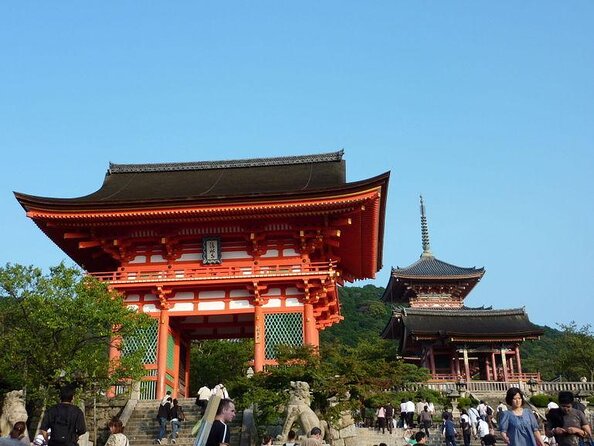
- Kiyomizu-dera supplies the big views: The wooden stage sits about 13 meters above the ground, with views toward Kyoto and the surrounding cherry and maple trees.
- The tea ceremony adds a calm change of pace: You learn the formal movements and customs of matcha preparation instead of only looking at temples from the outside.
- The route covers Kyoto’s most atmospheric old streets: Kiyomizu-zaka, Sannenzaka, and Ninenzaka are lined with sweets shops, teahouses, pickles, yatsuhashi, and souvenirs.
- Guide Hide receives special praise: His easy manner, temple explanations, photos, and even baseball conversation helped make the walk relaxed and social.
- The $109.39 price includes several useful extras: Temple entry, matcha, snacks, a local guide, and photos make the cost easier to justify than a simple guided temple visit.
Starting at Yasaka Shrine at 9 a.m.
The tour begins at 9 a.m. at Yasaka Shrine’s Nishiromon Gate, also called the Western Tower Gate, at 625 Gionmachi Kitagawa in Kyoto’s Higashiyama Ward. Yasaka Shrine is near public transportation and gives you a central starting point for Kyoto’s eastern temple district.
The early start is sensible. Kiyomizu-dera and the surrounding lanes become busier as the day goes on, and a morning walk gives you a better chance to enjoy the streets before the heaviest crowds. You should still arrive with time to spare. One person had trouble finding the guide at the meeting point, so do not cut it close, especially if Yasaka Shrine is new to you.
The activity returns to the same meeting point after about three hours. That makes it easy to continue sightseeing in Gion, return to your hotel, or plan lunch nearby. Since the tour is entirely built around walking, wear shoes that can handle slopes and stone-paved streets.
More Tea Ceremonies in Kyoto
- Kyoto: Tea Ceremony in a Traditional Tea House in Kiyomizu
★ 4.9 · 3,519 reviews - Kyoto: Tea Ceremony Ju-An at Jotokuji Temple
★ 4.9 · 3,207 reviews - Kyoto: 45-Minute Tea Ceremony Lesson Experience
★ 4.3 · 2,378 reviews
Kyoto’s old lanes around Kiyomizu-zaka
From Yasaka Shrine, the route takes you toward the Kiyomizu area and its older streets. Kiyomizu-zaka is not one single short lane. It refers to a group of traditional streets leading toward Kiyomizu-dera, with old teahouses, Japanese sweets shops, dried-food shops, souvenir stores, and small shops selling Kyoto specialties.
This is one of the tour’s most useful features. If you visit alone, it is easy to follow the main road without noticing the smaller details. A guide can point out the traditional style of the area and explain how the streets connect. You get a sense of Kyoto as a lived-in cultural district, not just a chain of famous photo stops.
The route also includes Yasakakoshindo, described as one of Kyoto’s most colorful temples. That stop gives the walk some visual variety before the larger Kiyomizu-dera complex. You may also see people dressed in traditional clothing in this district, though the tour should not be treated as a guaranteed geisha or maiko viewing experience.
The streets are attractive, but they are commercial as well as historic. Expect shops aimed at sightseers, including food samples and Kyoto gifts. That is not a flaw, but it helps set expectations. This portion works best if you enjoy browsing, taking photos, and hearing the story behind a place while walking through it.
Entering Kiyomizu-dera after the uphill walk
Kiyomizu-dera was built on the site of Otowa Waterfall about 1,200 years ago. Its name comes from the waterfall’s pure water, and the temple is now one of Kyoto’s essential sights and a UNESCO World Heritage Site.
The temple visit is the heart of the tour. Your guide explains the grounds, answers questions, and helps you make sense of the worship customs. This is especially helpful if you are new to Japanese religious sites and want to understand the difference between what you are seeing rather than simply passing through a gate, taking a photo, and moving on.
Kiyomizu-dera’s famous wooden stage rises about 13 meters above the ground. From here, you can look toward Kyoto and the hills of cherry and maple trees around the temple. The scenery changes with the season, but the view is a strong reason to include this temple in your first Kyoto visit.
The stage can be busy, and the surrounding grounds cover more ground than a quick photo stop suggests. A small group helps because your guide can keep everyone together without shouting across a large crowd. You should still expect other people at this popular temple, especially later in the day.
The tour includes the temple entrance fee, which is important when judging the price. You do not have to stand aside while the rest of your group buys admission, and the guide can take you directly into the visit.
Drinking from Otowa Waterfall
Otowa Waterfall is tied to the temple’s name and its spiritual meaning. The water is divided into three streams, with each associated with a different benefit. You select one stream and drink from it using a cup attached to a long pole.
This is a small moment, but it brings the customs of the temple to life. Your guide can show you how to take part respectfully and explain what you are doing. For many people, this will be more memorable than another quick look at an architectural detail.
Do not feel pressured to treat the water as a test or to choose all three streams. The tour description presents it as a chance to select one for good fortune. Follow the guide’s instructions and be mindful of the shared cup and the people waiting behind you.
More Temple & Shrine Tours in Kyoto
- Kyoto: Fushimi Inari, Kinkakuji, Bamboo Grove 1 Day Bus Tour
★ 4.8 · 4,316 reviews - Fushimi Inari Hidden Hiking Tour (Private Option Available)
★ 5.0 · 1,750 reviews - Osaka/Kyoto:Kinkakuji,Arashiyama,FushimiInariShrine,NaraPark
★ 4.1 · 1,596 reviews - Kyoto/Osaka: Nara, Fushimi Inari Taisha, Arashiyama Bus Tour
★ 4.7 · 1,275 reviews
Kiyomizu-zaka, Sannenzaka, and Ninenzaka
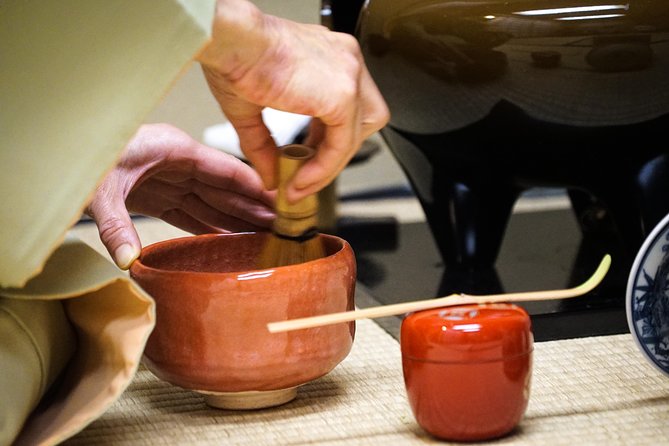
The approach to Kiyomizu-dera is part of the attraction. Kiyomizu-zaka is roughly a one-kilometer pilgrimage route, beginning near the crossing of Matsubara-dori and Higashioji-dori. The upper section becomes more commercial, with stores selling pickles, yatsuhashi, Kyoto sweets, and other souvenirs.
At the top, the Niomon Gate and three-story pagoda create the classic arrival view. A small Kiyomizu doll shop sits near the temple gate, adding another local detail to watch for.
The route also passes Sannenzaka and Ninenzaka, two historic slopes near Kiyomizu-dera. Sannenzaka has a famous warning attached to its name: according to legend, falling on the slope could shorten your life by three years. The story is generally treated as a caution to watch your footing, which is good advice regardless of folklore.
These lanes are photogenic, but they are not flat or empty. Shops line the slopes, and many people come here specifically to take pictures and buy local products. Take your time, but keep an eye on the group and your footing. The walk is manageable for most people, yet anyone with mobility concerns should consider the hills and uneven surfaces before booking.
A traditional tea ceremony with matcha
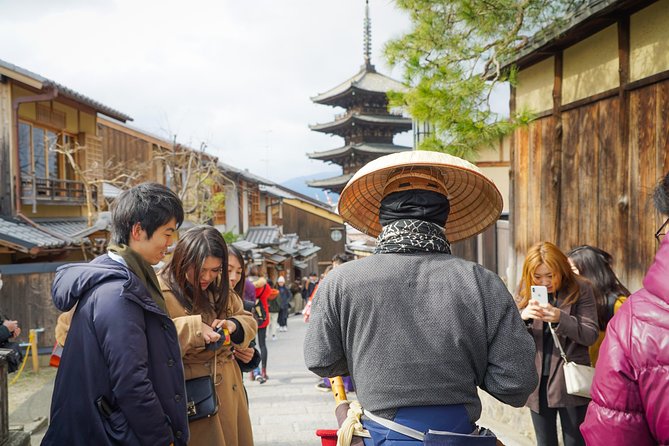
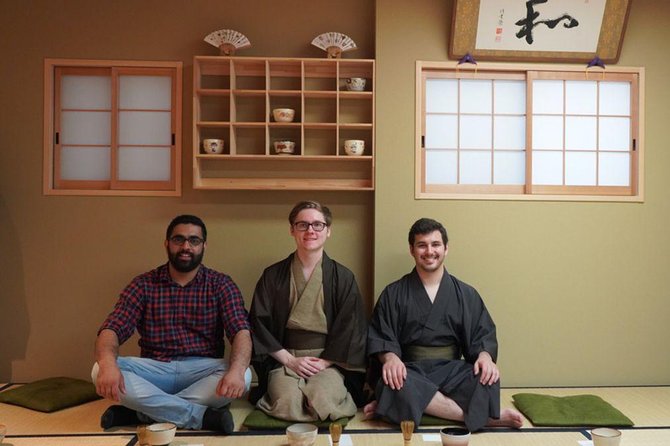
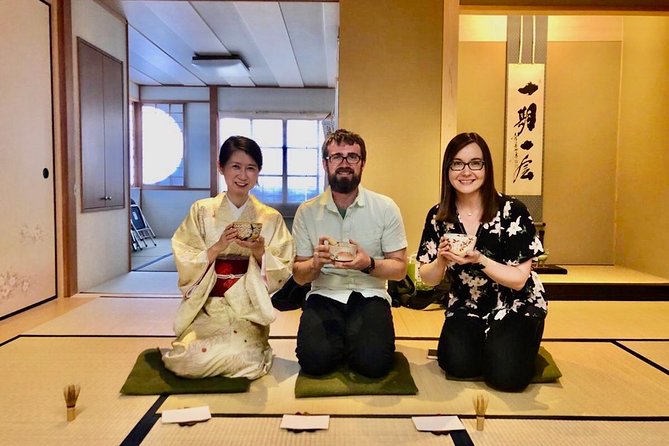
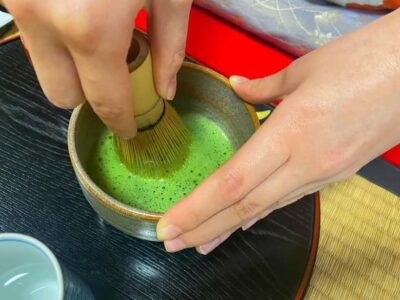
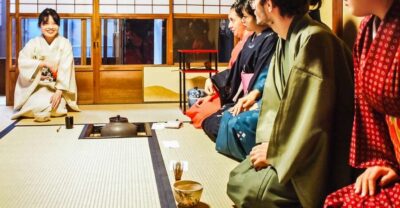
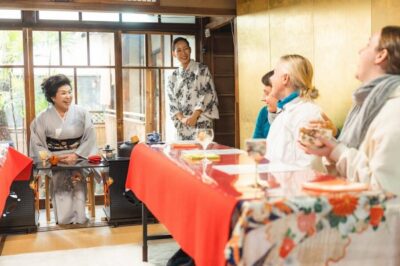
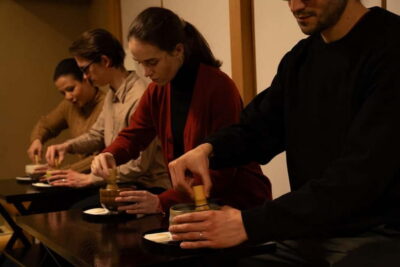
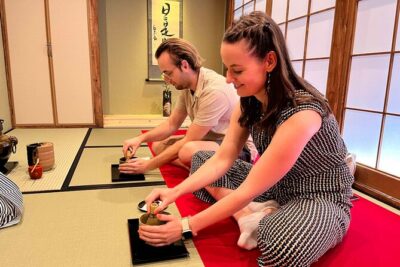
The tea ceremony gives the tour a welcome change of rhythm. After walking through shrines, temple grounds, and busy shopping lanes, you sit down for a formal Japanese cultural experience centered on matcha.
The value here is not simply the drink. A tea ceremony depends on careful movements, manners, timing, and attention to the objects being used. The person leading the ceremony, Haruki, is described as warm and entertaining, while another account praises the person presenting the ceremony for explaining the art and skill behind it.
You should expect a guided introduction rather than an entire formal tea-school course. That is the right scale for a three-hour sightseeing activity. You get a close look at an important Japanese custom and a chance to ask questions without needing to arrange a separate cultural activity.
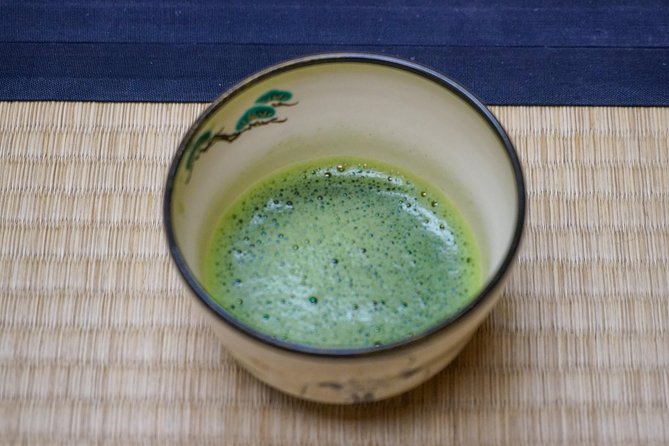
Matcha is included, along with a few snacks and food samplings. These small tastes help connect the ceremony with Kyoto’s food culture. Additional food and drinks are not included, so keep some money available if you want to buy more along the route.
If you have food allergies or dietary restrictions, take the warning seriously. The food is prepared in kitchens outside the tour company’s control, and substitutions may not be possible at every stop. The operator says it will try to compensate at other stops, but you should not book this as an allergy-free food tour.
Why the guide can make or break the morning
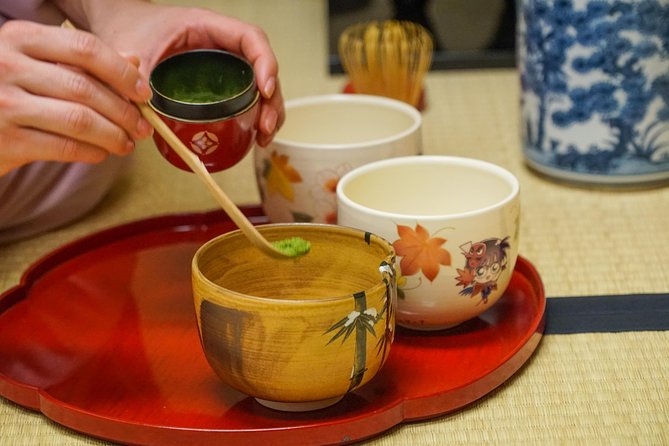
The route itself is famous, but the guide determines how much you get from it. Hide receives especially strong praise for explaining Shinto and Buddhism, discussing temple formalities, taking photos, and keeping the mood relaxed. His conversation apparently ranges beyond temples, even reaching baseball and a few dad jokes.
That detail matters. A guide who can explain religious customs in plain language is more useful than one who only recites dates. A relaxed personality also helps during a long walk where people may have different interests and energy levels.
The small-group cap of six is one of the tour’s best practical features. You can ask about the waterfall, temple architecture, tea ceremony, or local streets without waiting for a large group to catch up. It also gives the guide a better chance to take photos for you, a service specifically included in the experience.
The guide is not a substitute for personal free time. If you want to linger at every shop or spend a long stretch taking photographs, a fixed group route will limit you. I would use this tour to get oriented, learn the area, and identify places to revisit later on your own.
Is $109.39 a fair price?
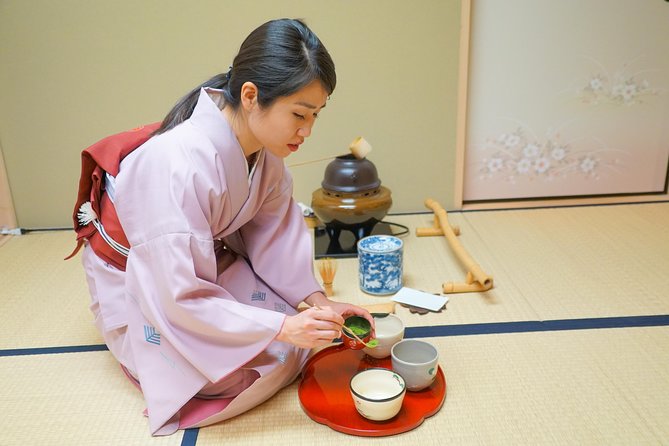
At $109.39 per person, this is not a budget walking tour. The value depends on how much help you want during your first visit to eastern Kyoto.
The fee covers roughly three hours with a local guide, Kiyomizu-dera admission, the tea ceremony, matcha, snacks, food samplings, and photos. Paying separately for each item could add up, and the guide saves you from planning a route through several connected historic areas.
I think the price is easiest to justify if you are visiting Kyoto for the first time, want a cultural activity beyond temple sightseeing, or prefer a small group over a large bus-style tour. It is less appealing if you are comfortable navigating Kyoto alone, plan to spend hours at Kiyomizu-dera, or mainly want a cheap introduction to the neighborhood.
The tour is also booked an average of 30 days ahead, which suggests that you should not leave it until the last minute if the morning time and small group matter to you. Free cancellation is available up to 24 hours before the start time. Cancellations or changes made inside that window are not eligible for a refund.
Practical advice for a comfortable visit
Wear supportive shoes. The route includes uphill streets, temple grounds, and the historic slopes around Sannenzaka and Ninenzaka.
Bring water and a hat in summer. Kyoto can be very hot and humid, and the operator specifically warns about heat illness. The 9 a.m. start helps, but it does not remove the need to protect yourself.
Children under six cannot join. Most other people can participate, but the route’s slopes and walking time may be tiring for anyone who struggles with hills.
The tour ends where it begins, at Yasaka Shrine. That is convenient, but plan your next stop before the tour finishes. You can continue exploring the Gion and Higashiyama area, or use public transportation to reach another part of Kyoto.
Who should book this Kyoto tour?
I would recommend it to first-time Kyoto visitors who want orientation and context without spending a full day on a guided excursion. The route brings together famous sights, old shopping streets, temple customs, and matcha in a compact morning.
It also suits solo visitors and couples who like a small group, families with children over six, and anyone who wants photos taken during the walk. The calm tea ceremony balances the uphill sightseeing and gives the morning a clear cultural focus.
I would hesitate if you have strict dietary restrictions, dislike hills, need extensive free time, or prefer to explore temples silently at your own pace. The $109.39 cost is fair for the bundled experience, but it is not the right choice for every budget.
Book this tour if you want Kyoto explained as you walk through it, not simply photographed. Skip it if you already know Kiyomizu-dera and the surrounding lanes well. For a first morning in the district, the combination of Hide’s relaxed guidance, Otowa Waterfall, the temple views, and the tea ceremony makes a strong introduction.
FAQ
How long does the Kyoto tea ceremony and Kiyomizu-dera tour last?
The experience lasts approximately three hours.
Where does the tour begin?
It begins at Yasaka Shrine’s Nishiromon Gate, also called the Western Tower Gate, at 625 Gionmachi Kitagawa, Higashiyama Ward, Kyoto.
What time does the tour start?
The scheduled start time is 9 a.m.
Where does the tour end?
The activity ends back at the Yasaka Shrine meeting point.
Is the Kiyomizu-dera entrance fee included?
Yes. Admission to Kiyomizu-dera Temple is included in the price.
Are matcha and snacks included?
Yes. The experience includes matcha, snacks, and a few food samplings. Additional food and drinks are not included.
Can children under six join the tour?
No. Children under six years old are not allowed to participate.
More Walking Tours in Kyoto
- Kyoto Geisha Walking Tour: Gion District & Hidden Gems
★ 4.7 · 3,273 reviews - Kyoto: Gion Magical Night Walking Tour with Geisha Trivia
★ 4.9 · 2,393 reviews - Kyoto: Gion Geisha District Walking Tour – Stories of Geisha
★ 4.7 · 2,187 reviews - Night Walk in Gion: Kyoto’s Geisha District
★ 4.5 · 2,003 reviews
Just added around Kyoto
- Kyoto: Gion Night Walking Tour with Geisha Insight★ 5.0 · 39 reviews
- Kyoto: Private Customizable Day Trip by Car★ 5.0 · 38 reviews
- Kyoto: Full Day Bike Tour★ 4.9 · 39 reviews
- Private Japanese Calligraphy in Kyoto – Learn Shodō with a Master★ 5.0 · 39 reviews
- Experience a tea ceremony in an authentic tearoom, in Kyoto!★ 4.5 · 41 reviews
- Kyoto: Gion Evening Walk with Hidden Gems, Geisha & Sake★ 5.0 · 41 reviews
- Kyoto Private Photo Shoot & Tour by SnapKyoto★ 5.0 · 41 reviews
- The Way of Tea: Kyoto Crafts, Hidden Temples & Wabi-Sabi Walk★ 5.0 · 41 reviews
Tea Ceremony Experiences, compared.
Tea Ceremony in a Traditional Tea House in Kiyomizu
Read our review →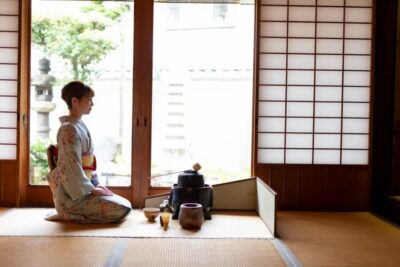
Browse the lists this tour appears in