
Reviewed · TRADITIONAL CRAFT WORKSHOPS
From Osaka: Sakai Knife Maker or Blacksmith Walking Tour
Sakai turns kitchen knives into living history. This 210-minute walk from Osaka combines local sweets, city history, and hands-on craft with access to workshops most visitors would not find alone. I especially like the stop at the old Yao Gen Raikodo sweet shop, where you get a traditional treat, and the chance to learn Japanese knife sharpening from a trained guide.
I also like the tour’s small-scale feel. Guides such as Remy, Scott, Jean-Yves, and others bring the streets and workshops to life, while blacksmith Eric Chevallier lets you see old-style forging at close range. The main consideration is scheduling: the knife maker and blacksmith visits happen on different days, and the museum can close on the third Tuesday of the month.
In This Review
- At a glance: what makes this Sakai walk special
- Why Sakai is the right place for a knife tour
- Starting at Nankai Sakai Station
- A sweet beginning at Yao Gen Raikodo
- Sakai City Craft Museum and the story of cutlery
- Tuesdays and Thursdays at Yamawaki Hamono
- Wednesdays at the De Sakai blacksmith forge
- Choosing the right day
- What the $64 price gives you
- The walking, timing, and group experience
- What could be better
- Who should book this Sakai experience?
- Should you book the Sakai knife tour?
- FAQ
- Where does the Sakai knife tour begin?
- How long does the tour last?
- How much does the tour cost?
- Which days visit the Yamawaki Hamono knife maker?
- Which day visits the blacksmith forge?
- Can I order a custom knife?
- Is knife sharpening included?
- Is French guaranteed on the tour?
- Can one person book the tour?
At a glance: what makes this Sakai walk special
- Taste Sakai’s old-fashioned sweets: Stop at Yao Gen Raikodo, an established local shop, and try one included sweet such as mochi.
- Choose between two craft experiences: Tuesdays and Thursdays focus on Yamawaki Hamono’s knife-making process, while Wednesdays visit the De Sakai blacksmith forge.
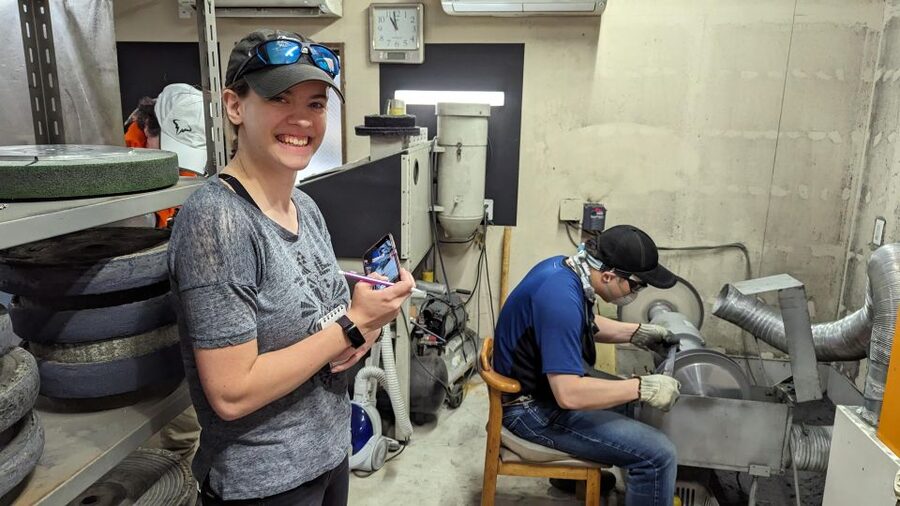
- Get beyond the shop counter: At the knife maker, you can watch blades being sharpened, finished, and turned into cooking knives.
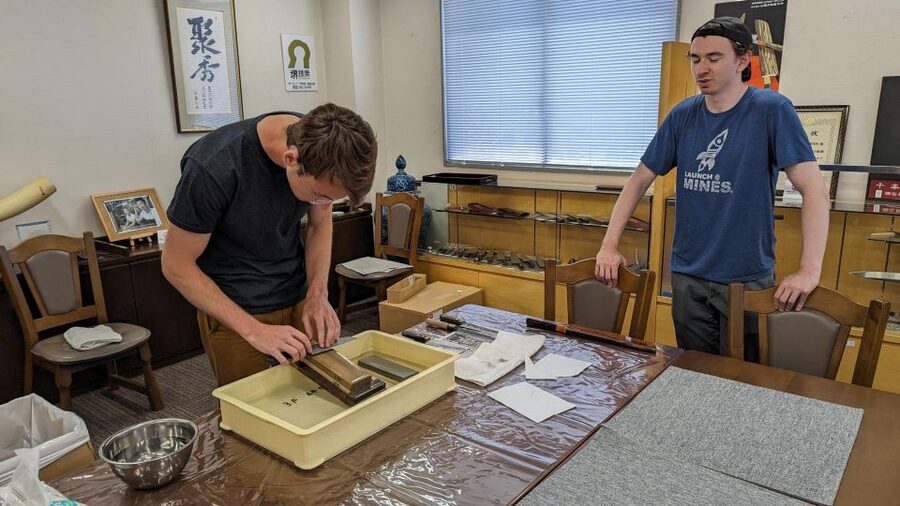
- Try traditional sharpening: The tour includes a practical lesson in the Japanese technique, useful if you plan to buy a knife.
- Order a personalized knife: On knife-maker days, you can request a customizable knife and watch it being made.
- Travel from Osaka with little fuss: The walk begins at Nankai Sakai Station, about 25 minutes from Osaka Namba by one reviewer’s estimate.
Why Sakai is the right place for a knife tour
Sakai is south of central Osaka, and the tour gives you a reason to visit beyond the usual city sights. The area is tied to craft production, cutlery, sweets, and local trade. You are not simply dropped into a showroom. You walk through the district, hear stories about Sakai, and see how the knife industry fits into the city.
That context matters. Japanese kitchen knives can look beautiful in a store, but it is harder to understand their value from a display case alone. Here, you see the work behind them: raw blades, sharpening, finishing, engraving, and the decisions that turn a piece of steel into a cooking tool.
Guides add much of the value. Remy, who has lived in Japan for more than 15 years, has led visitors through the local story and knife craft. Scott is praised for keeping strangers talking and for explaining the area in a relaxed way. Jean-Yves has also guided the walk with energy and clear explanations.
You should expect a friendly small-group atmosphere rather than a large bus tour. Private or small-group options are available, and the guide can adjust the pace and explanation to the group. Still, the tour involves several walks, so comfortable shoes make sense.
More Craft Workshops in Osaka
- Osaka: Traditional Mochi Pounding Experience with Tasting
★ 4.9 · 306 reviews - Kamigata Ukiyoe Museum:Ukiyo-e Woodblock Printing Experience
★ 4.9 · 79 reviews - 1.5〜2 Hours Traditional Kintsugi Work Shop in Namba Osaka
★ 5.0 · 75 reviews
Starting at Nankai Sakai Station
You meet your guide at Nankai Sakai Station. The exact meeting point can vary with the option you choose, so check your booking details before setting out. From the station, the first walk takes about 15 minutes.
That opening walk is part of the point. You are moving through Sakai rather than rushing straight to a workshop. The guide can explain local landmarks and the city’s connection to trade and craft as you go. One account also noted that the journey from Osaka Namba takes about 25 minutes, making this a manageable half-day outing from the city.
The tour is listed as wheelchair accessible, though the route includes several on-foot sections. If you need a precise answer about the day’s route, contact the provider before booking.
A sweet beginning at Yao Gen Raikodo
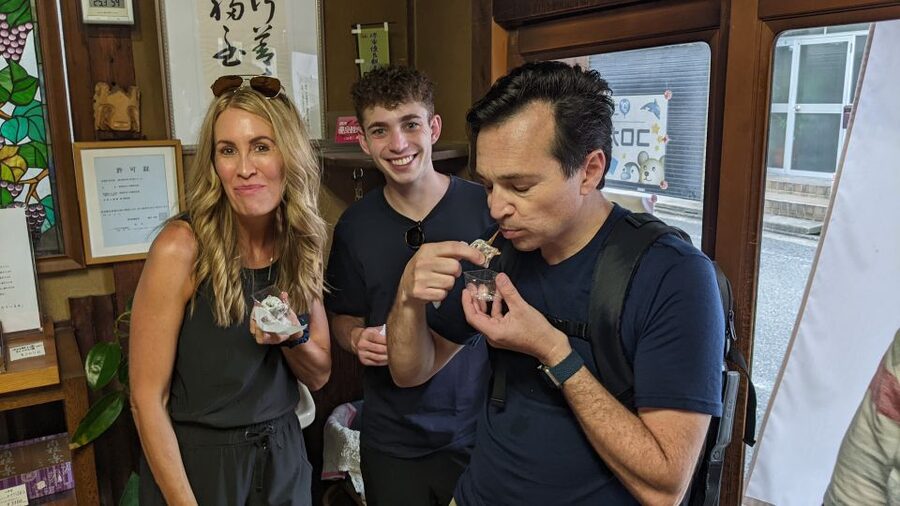
The first stop is Yao Gen Raikodo, an old-style sweet shop. You have about 20 minutes here for a visit, tasting, and possible shopping. One sweet is included, while extra food and drinks cost more.
This stop works better than it might sound on paper. Sakai is not presented only as a place that makes knives. You also meet a local food tradition and see a small shop with its own connection to the neighborhood.
The mochi has been a highlight for many people on the walk. Specific flavors mentioned include poppyseed mochi and cinnamon mochi. The cinnamon version, in particular, seems to surprise people who expect a more familiar Japanese sweet.
You may also hear the story of the shop and its owner. That short conversation helps make the stop feel personal instead of being a quick food sample for tourists. If you want to buy more sweets, this is a good moment to do so. The tour includes one item, but shopping is not included in the $64 price.
Sakai City Craft Museum and the story of cutlery
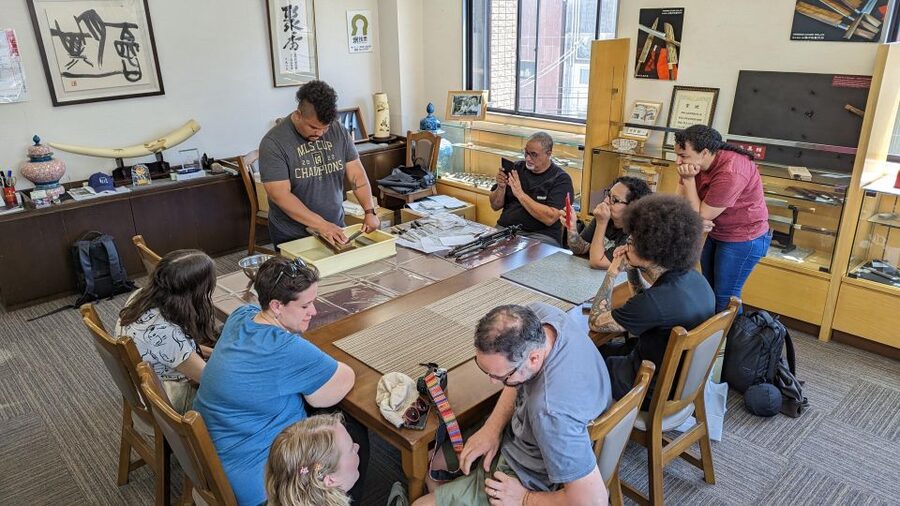
After another short walk, you spend about 30 minutes at the Sakai Traditional Crafts Museum and Knife Shop. This is a self-guided museum visit, with time for photos and browsing.
The museum gives you the background needed for the workshop. You learn what Sakai is famous for and how the city’s cutlery tradition developed. It is not the longest museum visit, but it helps you understand the tools before seeing them made.
This stop also gives you a chance to look at knives in a retail setting. That can be useful if you are still deciding what kind of knife interests you. You may compare shapes and styles before reaching the knife maker, where your questions can become more specific.
There is one scheduling issue to keep in mind. On every third Tuesday of the month, the museum may close for inventory without notice. If that happens, your guide takes you directly to the knife company and explains the cutlery story during the walk and at the office. You lose the museum visit, but the tour continues.
More Walking Tours in Osaka
- Osaka: Hotspots & Hidden Gems Walking Tour Private or Group
★ 4.9 · 1,300 reviews - Osaka Local Foodie Walking Tour in Dotonbori and Shinsekai
★ 5.0 · 985 reviews - Osaka Bar Hopping Night Walking Tour in Namba (3 bars, 6 tastes)
★ 5.0 · 958 reviews - Osaka: Deep Backstreets Walking Tour with Dinner Option
★ 4.9 · 902 reviews
Tuesdays and Thursdays at Yamawaki Hamono
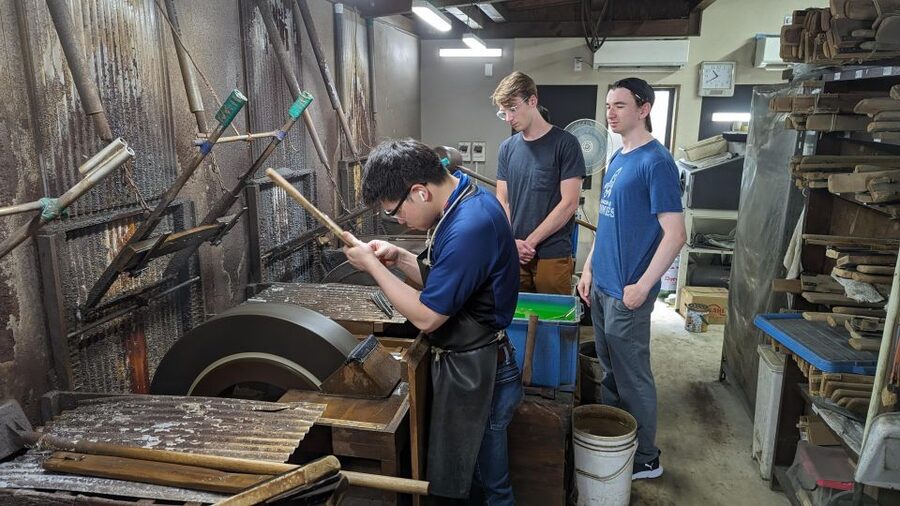
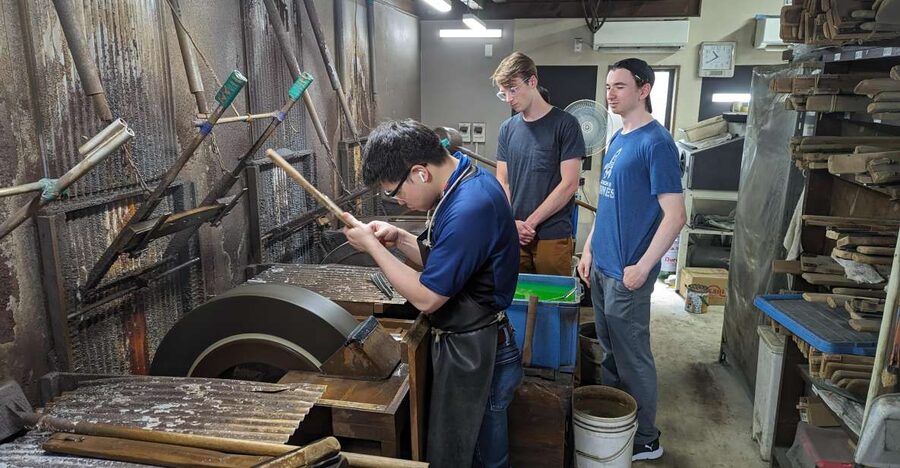
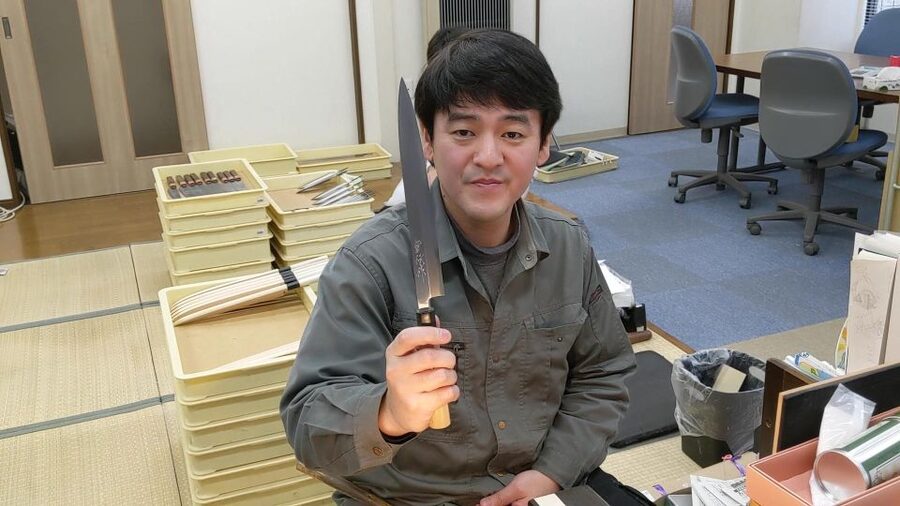
On Tuesdays and Thursdays, the tour visits Yamawaki Hamono, a knife-making company with more than 100 years of history. The visit lasts about 90 minutes and includes a guided tour, workshop time, sharpening instruction, and shopping.
The company receives raw blades directly from the blacksmith. At the sharpening station, you can see how those blades become usable cooking knives. You also visit the main office and observe the steps that give each knife its finished form.
This is the better choice if you want to understand the production of a working kitchen knife. You are not only watching a blade being forged. You see the later stages, where accuracy, edge work, and finishing matter just as much.
The hands-on sharpening lesson is one of the tour’s most practical features. A trained guide explains the traditional Japanese technique and lets you practice. That is especially useful if you plan to buy a knife, since owning a fine blade also means learning how to care for it.
On this day, you can order a customizable knife. The guide can help with the purchase, and you may watch the knife being made in front of you. Customization details can vary, so ask what is available on your date. Shopping and souvenirs are not included in the tour price.
One important point: this is primarily a kitchen knife experience. If you are looking for hunting knives, pocket knives, or general-purpose outdoor blades, this may not fit your interests. A past participant specifically suggested thinking of it as a kitchen knife factory visit.
Wednesdays at the De Sakai blacksmith forge
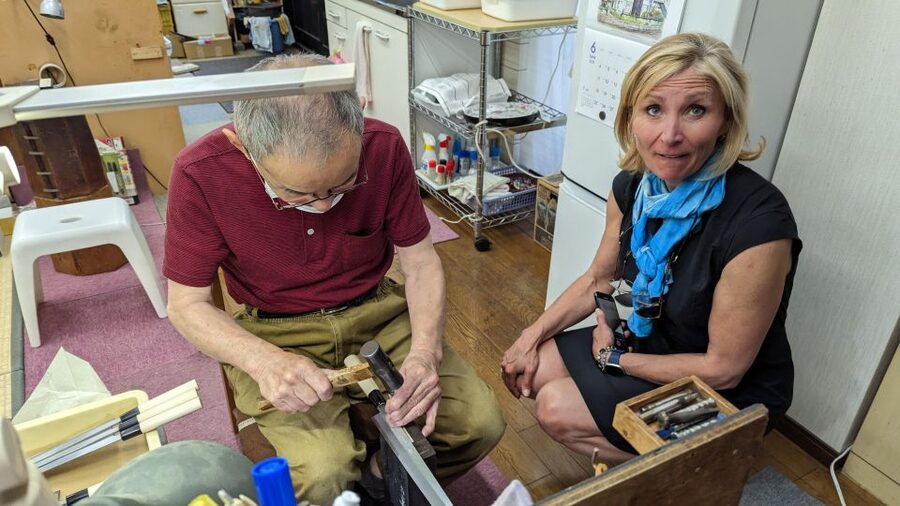
Wednesday offers a different kind of craft encounter. You visit the De Sakai blacksmith workshop for about an hour, with time for a guided tour, free time, shopping, and a hands-on class.
At the forge, the artisan explains the forging process and techniques directly. The strongest part of this option is the chance to see old-style hand forging in a small workshop. Blacksmith Eric Chevallier has been singled out for showing the process clearly and letting visitors take part.
The practical moment can include hammering glowing steel as the first step toward making a knife. That is a rare chance to feel the physical side of the craft instead of simply watching from behind a barrier. Safety instructions and the exact amount of participation depend on the workshop and the day.
The blacksmith option suits you if you care more about the origin of the blade than the final sharpening and finishing stages. You see the transformation of heated steel through the artisan’s work, then gain a clearer sense of how much skill sits behind a simple-looking kitchen tool.
French instruction is available from Eric on blacksmith days, but French is not guaranteed on a shared tour. All guides speak English, and some also speak French. Contact the provider before booking if French guiding is essential.
Choosing the right day
Your day choice changes the tour in a meaningful way.
Choose Tuesday or Thursday if you want:
- A closer look at kitchen knife finishing
- A sharpening lesson
- Access to Yamawaki Hamono
- The option to order a customizable knife
- Help with selecting and purchasing a finished blade
Choose Wednesday if you want:
- A visit to a working blacksmith forge
- An explanation of hand-forging methods
- A chance to hammer heated steel
- Direct contact with artisan Eric Chevallier
- A more old-style workshop setting
From March 6 to April 6, 2026, only the blacksmith visit is available. During that period, Tuesdays and Wednesdays can still offer the blacksmith experience at the knife-maker rate, which makes those dates a useful value if you are flexible.
The two options are not interchangeable. The knife maker shows you how a raw blade becomes a finished cooking knife. The blacksmith shows you how the steel begins its life. If knives are your main interest, read the schedule carefully before choosing.
What the $64 price gives you
At $64 per person, the tour is not the cheapest way to spend a morning in Osaka. It is fairly priced if you want guided access to the workshops, local interpretation, a sweet tasting, museum entry, and a sharpening lesson in one outing.
The value comes from access. You could visit Sakai on your own, but you would likely see the museum and retail displays without entering the private work areas. The guide also helps bridge language and craft vocabulary, which is useful when you are comparing knives or asking about custom work.
The price does not cover extra sweets, drinks, knives, or souvenirs. A knife purchase can easily become the largest expense of the day, so treat the tour price as the cost of the introduction, not the complete cost of a shopping trip.
I also like that the tour does not force you to buy. You get shopping time and guidance, but the craft visits remain useful even if you leave without a blade. For a serious home cook, the sharpening lesson alone adds practical value.
The walking, timing, and group experience
The full tour lasts 210 minutes. The stated route includes walks of about 15 minutes from the station, five minutes to the museum, five minutes to the workshop, and 15 minutes back toward the drop-off point. The remaining time is spent at the sweet shop, museum, and craft site.
That makes this a compact half-day activity, but it is still a walking tour. You should be ready to spend several hours on your feet. The short transfers keep the route manageable, and the stops break up the walking.
Private and small-group options are available. A single person can book, but the tour has a two-person minimum for the session to operate. If only one person books, the session may be canceled, with rescheduling or a full refund offered.
The guides are a major part of the experience. Remy has been praised for mixing local stories with knife expertise. Scott is especially good at drawing a group into conversation. If you have a question about lunch afterward, ask your guide. One guide’s restaurant suggestion earned a particularly strong endorsement.
What could be better
The main weakness is the schedule. You cannot assume that every date includes both the knife maker and the blacksmith. The choice between Tuesday, Wednesday, and Thursday changes the core craft visit.
The museum may also be closed on the third Tuesday of the month. The alternative route keeps the history lesson going, but you should not book that date expecting a guaranteed museum visit.
A second consideration is the focus on kitchen knives. This is not a broad tour of every Japanese blade tradition. If you are hoping to see sword making or outdoor knife production, ask questions before booking.
Finally, the itinerary can feel slightly busy if your group lingers over shopping or conversation. The guide-led format helps, but you still have several stops in less than four hours. That compact pace is useful for an Osaka day trip, though it leaves little room for an unplanned side visit.
Who should book this Sakai experience?
I would recommend it most strongly to home cooks, food lovers, craft enthusiasts, and anyone who wants a quieter side trip from Osaka. It also works well for couples or families when one person loves knives and the others want local food and history.
Teenagers may enjoy the hands-on parts, especially the blacksmith visit. The sweet shop and short museum visit give the outing more variety than a factory tour alone.
You should probably skip it if you dislike walking, have no interest in kitchen tools, or want a large museum with hours of exhibits. The museum visit is brief, and the heart of the day is access to working craftspeople.
Should you book the Sakai knife tour?
Book it if you want to see how Japanese kitchen knives are made, learn a skill you can use at home, and meet the people behind the tools. The strongest choice depends on your priorities: Tuesday or Thursday for knife finishing and sharpening, Wednesday for forging with Eric Chevallier.
At $64, the tour offers good value for anyone who would otherwise struggle to find these workshops or communicate inside them. Check the date, confirm your preferred language, and leave room in your budget for a knife or sweets. If those details suit you, this is a thoughtful way to spend half a day outside central Osaka.
FAQ
Where does the Sakai knife tour begin?
The tour begins at Nankai Sakai Station, south of Osaka. The exact meeting point can vary depending on the option booked.
How long does the tour last?
The tour lasts 210 minutes, or three and a half hours.
How much does the tour cost?
The listed price is $64 per person. Extra food, drinks, knives, and souvenirs are not included.
Which days visit the Yamawaki Hamono knife maker?
The knife-maker visit is scheduled for Tuesdays and Thursdays.
Which day visits the blacksmith forge?
The blacksmith visit is scheduled for Wednesdays. The workshop is called Forge DeSakai, and the artisan is Eric Chevallier.
Can I order a custom knife?
Yes. On knife-maker days, you can order a customizable knife as an optional purchase and may watch it being made.
Is knife sharpening included?
Yes. The tour includes a lesson in the traditional Japanese knife-sharpening technique.
Is French guaranteed on the tour?
No. All guides speak English, and some guides also speak French. French is not guaranteed on a shared tour, so contact the provider before booking if you need a French-speaking guide.
Can one person book the tour?
A single traveler can book, but the session requires at least two guests to operate. If only one person books, the tour may be canceled, with rescheduling or a full refund offered.
Just added around Osaka
- Osaka Food Tour with 10 Classic Japanese Tastings & Drinks★ 5.0 · 38 reviews
- Osaka: Highlights & Hidden Gems Private Walking Tour★ 4.7 · 38 reviews
- Kyoto private tour (Shore excursion available from Osaka or Kobe port)★ 5.0 · 39 reviews
- Osaka Private Day Trip – Enjoy Your First-Time Visit to Osaka!★ 5.0 · 39 reviews
- Kyoto & Nara & Uji: Full Day Sightseeing Tour from Osaka or Kyoto★ 4.5 · 39 reviews
- Authentic SUSHI Course Cooking Class★ 5.0 · 39 reviews
- Osaka: Mind & Spirit Balance Temple Reiki Healing★ 5.0 · 41 reviews
- Osaka: Gluten-Free Ramen and Gyoza Cooking Class★ 5.0 · 42 reviews
Traditional Craft Workshops, compared.
Chopsticks Making Workshop in Gion with Engraving Option
Read our review →
Kintsugi Experience: Art of Golden Joinery in Tokyo
Read our review →
Authentic knife making experience at a blacksmith in Kyoto
Read our review →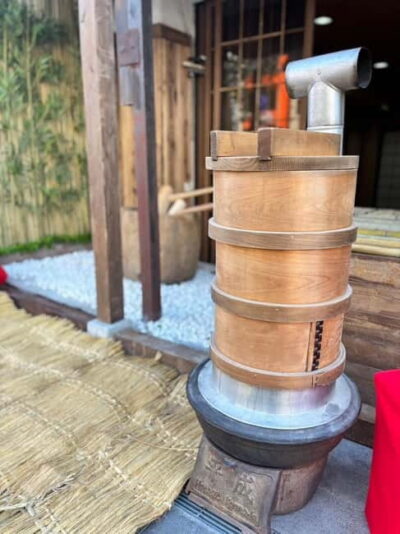
Traditional Mochi Pounding Experience with Tasting
Read our review →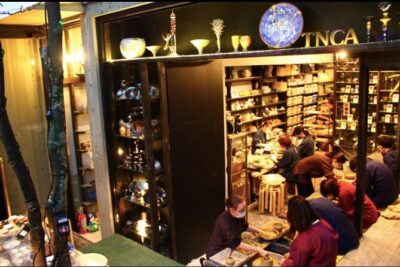
Authentic Pure Gold Kintsugi Workshop with Master Taku in Tokyo
Read our review →
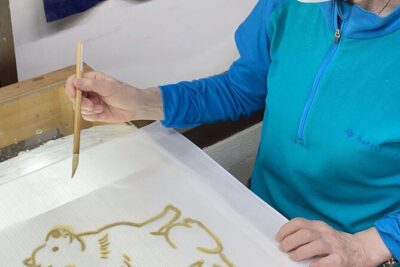
Roketsu dyeing experience: M course Roketsu Dyeing Experience
Read our review →Browse the lists this tour appears in