
Reviewed · COOKING CLASSES
Osaka Cooking Class and Sake Tasting with Local Supermarket Visit
Start with Osaka’s food, not just its sights. This four-hour class combines a local supermarket visit with hands-on cooking, so you learn what goes into familiar Japanese dishes before you sit down to eat them. I especially like the chance to make okonomiyaki, gyoza, and niku-sui, then pair the meal with local sake, beer, or a soft drink. I also like the small maximum group of seven, which should give you room to ask questions. The main point to consider is the price: at $92.50 per person, this is not a cheap meal, though the market visit, instruction, cooking, and drinks make it more than a restaurant stop.
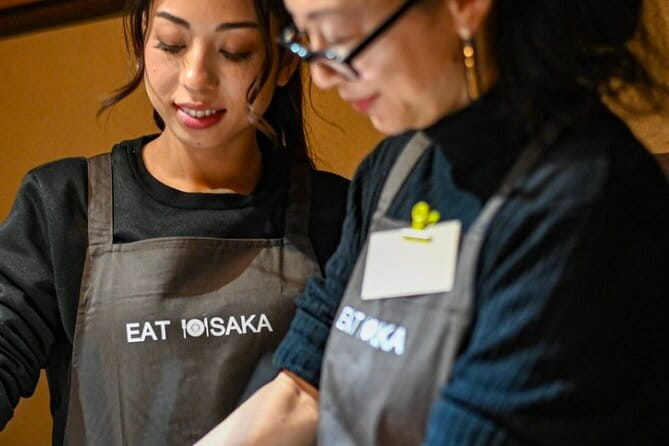
The class begins at 10:00 a.m. outside FamilyMart on the south side of Minami-morimachi Station in Osaka’s Kita Ward. Guides such as Yuka and Mari have been praised for clear explanations and friendly, hands-on help. You do not need cooking experience, but you should be ready to spend four hours standing, preparing food, and taking part rather than simply watching.
In This Review
- Key points at a glance
- Why this class fits Osaka so well
- Meeting at Minami-morimachi Station
- Shopping for ingredients in a local supermarket
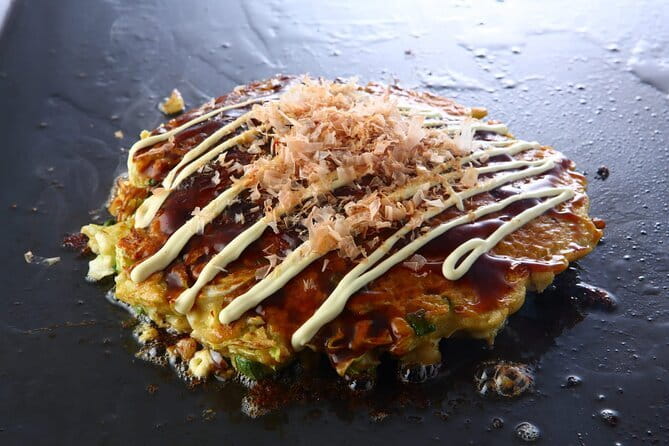
- Cooking okonomiyaki, Osaka’s savory pancake
- Folding gyoza with practical guidance
- Making niku-sui, a comforting beef soup
- Eating the finished meal with sake
- The value of $92.50 for four hours
- Who should book this experience
- Practical details before you go
- Should you book the Osaka cooking class?
- FAQ
- Where does the Osaka cooking class begin?
- What time does the activity start?
- How long does the cooking and sake experience last?
- Where does the activity finish?
- How many people can join the class?
- Do I need previous cooking experience?
- What drinks are available with the meal?
Key points at a glance
- A supermarket visit comes first: You see how ordinary Osaka shoppers choose ingredients before cooking with them.
- Three Osaka favorites are on the menu: Make okonomiyaki, gyoza, and niku-sui with step-by-step help.
- The class stays small: The maximum is seven people, a useful size for personal guidance.
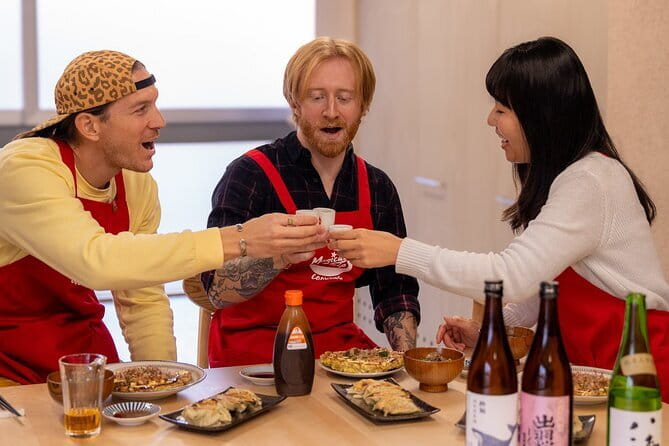
- Sake is part of the meal: You can taste local sake, beer, or soft drinks while eating what you prepared.
- Yuka and Mari have earned warm praise: Their clear explanations and encouraging style are a major part of the appeal.
- The meeting point is simple: Start at FamilyMart by Minami-morimachi Station and return there when the class ends.
Why this class fits Osaka so well
Osaka has a strong food identity, and this class puts that identity on your plate. Instead of only eating finished dishes, you learn how several everyday favorites are made and why the ingredients matter.
That difference is important. A food tour can show you what to eat, but a cooking class gives you a skill you can carry home. The recipes are designed for beginners, so you are not expected to arrive with knife skills or Japanese cooking experience. You can follow the guide’s instructions, ask for help, and take part at your own pace.
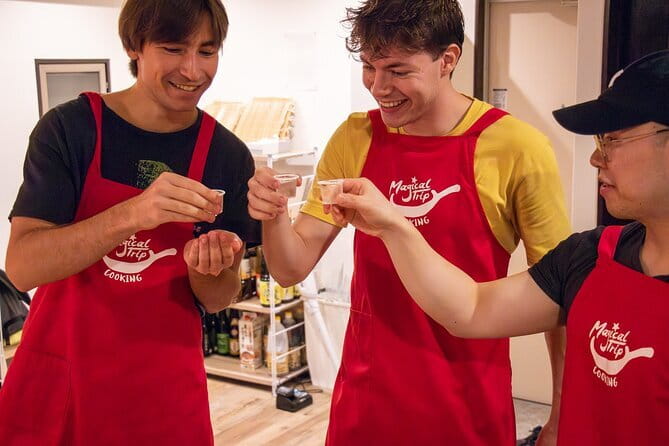
The combination of cooking and sake tasting also gives the four hours a natural rhythm. You begin with shopping and ingredient explanations, move into preparation, and finish by eating together. It feels more like a shared food activity than a formal lesson.
I would not choose this class if you want a quick demonstration with plenty of free time afterward. Four hours is a real half-day commitment. For anyone who enjoys food and wants an activity with useful take-home value, the length is part of the appeal.
More Cooking Classes in Osaka
- Osaka: Ramen and Gyoza Cooking Class in Dotonbori
★ 5.0 · 378 reviews - Osaka Cooking Class: Okonomiyaki &Japanese cuisines experience
★ 5.0 · 261 reviews - Ramen and Gyoza Cooking Class in Osaka
★ 5.0 · 202 reviews
Meeting at Minami-morimachi Station
Your morning begins at FamilyMart Minamimorimachi station South side, at 2-chome 3-10, 1F, in Osaka’s Kita Ward. The listed start time is 10:00 a.m., and the meeting point is near public transportation.
This is a practical starting place because you do not need to find a private studio in an unfamiliar neighborhood. Give yourself enough time to reach the station area and identify the correct south-side meeting point. The activity finishes back where it starts, so you do not need to arrange a second pickup location or guess where to go afterward.
The location also keeps the morning grounded in ordinary Osaka life. You are not beginning in a staged food hall or a sightseeing attraction. You meet near a local station, then head into the neighborhood market routine that gives the class its setting.
A mobile ticket is provided, which is handy for a morning activity. Keep the booking details easy to access on your phone, especially if you are moving through the station area before the class begins.
Shopping for ingredients in a local supermarket
The supermarket visit is more useful than it might first sound. Your guide explains what to buy for the dishes, points out local ingredients, and helps you connect packaged products with the recipes you will prepare later.
Mari has been praised for explaining what to shop for when making the different dishes. That kind of guidance matters because Japanese supermarkets can be confusing at first. Labels, sauces, cuts of meat, and prepared ingredients may not be immediately clear if you cannot read Japanese. Rather than wandering through the aisles, you get a reason for each purchase.
This stop also gives you a look at daily Osaka food culture. A supermarket is not a performance built for sightseeing. It is a practical place where people buy dinner, snacks, drinks, and cooking supplies. You may find that this ordinary setting teaches you more about local habits than a polished food display would.
The market visit should also make the cooking easier. Once you have seen the ingredients in their original setting, the later preparation has more context. You know what the sauce bottle or package looked like before it was opened, and you can ask about items you might want to find again.
The limitation is that this is a guided shopping visit, not a long stretch of free browsing. The focus is on selecting ingredients for the class. If you want time to shop for gifts or inspect every aisle, you may need to return to a supermarket on your own.
Cooking okonomiyaki, Osaka’s savory pancake
Okonomiyaki is one of the best choices for a first Japanese cooking lesson. The dish is approachable, flexible, and strongly linked with Osaka’s food culture.
You will learn how to prepare the mixture and cook the savory pancake with guidance from the instructor. The class is suitable for beginners, so you should not feel pressure to produce restaurant-perfect results. The point is to understand the basic method and gain enough confidence to repeat it at home.
I like this part of the menu because the result feels substantial. You are not making a tiny sample. You prepare a dish that can become a complete meal, and you can adjust your approach later based on what you learn in class.
The hands-on format is important here. You are not simply watching a guide flip a pancake. You practice the technique and receive live feedback as you work. That makes the lesson more memorable, especially if you learn best by doing.
More Food Tours in Osaka
- Osaka: Shinsekai Food Tour with 13-15 Dishes at 5 Eateries
★ 4.8 · 2,204 reviews - Osaka Food Tour: 13 Dishes at 5 Local Eateries
★ 5.0 · 2,149 reviews - Hungry Osaka Street Food Tour:15 Tastings & 3 Drinks with a Local
★ 5.0 · 1,727 reviews - Hungry Osaka Street Food Tour: 15 Dishes & 3 Drinks
★ 4.9 · 694 reviews
Folding gyoza with practical guidance
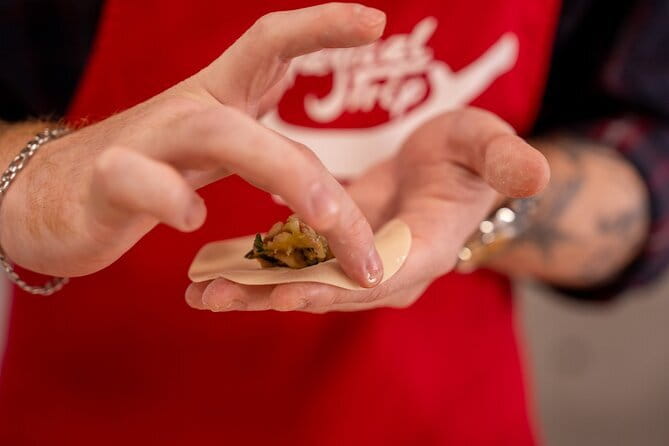
Gyoza brings a different skill to the class. Folding dumplings takes patience and a little coordination, but the beginner-friendly format means you can learn without treating the activity like a cooking exam.
The folding process is one of the most social parts of the class. You can compare shapes, improve with each dumpling, and ask the instructor to correct your technique. Even if your first few folds look uneven, that is part of the fun. Homemade dumplings do not need to look factory-made to taste good.
This is also a useful skill to take home. Once you understand the basic folding method, you can try the recipe again with other fillings. The class does not promise advanced culinary training, but it gives you a practical starting point.
Guide support makes a difference. The positive comments about Yuka and Mari focus on clear explanations and hands-on help, not just the food itself. That suggests the teaching style is a key part of the experience, particularly for anyone who feels nervous in a kitchen.
Making niku-sui, a comforting beef soup
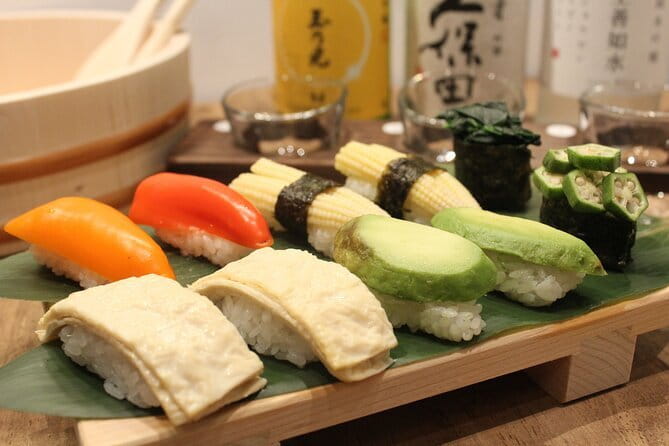
Niku-sui gives the meal a warm, simple dish to balance the okonomiyaki and gyoza. It is a beef soup, and preparing it helps show how Japanese home cooking can turn a few straightforward ingredients into something comforting.
This dish may be especially valuable if you want to understand food beyond Osaka’s famous street snacks. Okonomiyaki gets much of the attention, but a soup such as niku-sui shows another side of the local table. It is less about dramatic presentation and more about flavor, warmth, and everyday cooking.
The three dishes also keep the class varied. You prepare a savory pancake, fold dumplings, and make soup. Each recipe uses a different type of work, so the session should not feel like repeating one cooking technique for four hours.
Because the class is designed for all skill levels, you can expect the guide to break the recipes into manageable steps. Still, you should bring some energy. You will be actively preparing several dishes, not just sitting at a counter while someone else cooks.
Eating the finished meal with sake
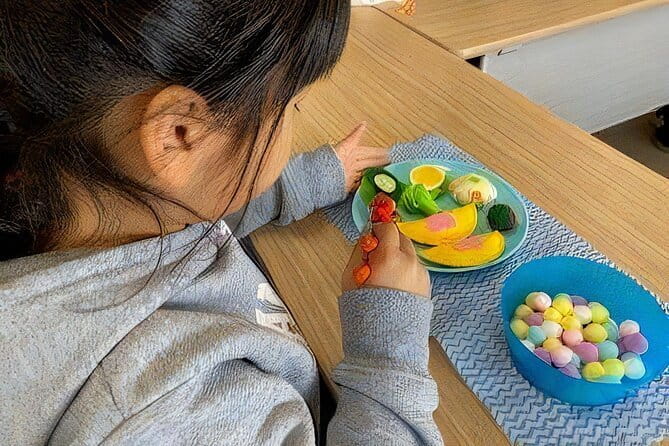
Once the food is ready, you sit down to enjoy it with local sake, beer, or soft drinks. This is where the class shifts from lesson to shared meal.
The sake tasting adds value, especially if you are curious about Japanese drinks but do not know what to order in a restaurant. You can try sake in the context of food, which gives you a better sense of how it fits with the dishes. If you do not drink alcohol, beer and soft drinks are available, so the class does not depend on sake.
There is no need to treat the tasting as a serious study session. The main pleasure is eating the food you helped prepare and sharing the results with the group. That relaxed finish helps the class feel welcoming for solo participants, couples, families, and friends.
Keep expectations sensible. The information provided does not specify the number of sake samples, the brands, or a formal tasting lesson. Think of the drinks as part of the meal and cultural setting, not a specialist sake course.
The value of $92.50 for four hours
At $92.50 per person, the class costs more than buying an okonomiyaki lunch or visiting a supermarket alone. You are paying for several elements at once: a guide, ingredient shopping, a private cooking studio, instruction, three dishes, and drinks.
The small group helps justify the price. With a maximum of seven people, the instructor has a better chance to watch your cooking, answer questions, and help with techniques such as gyoza folding. A large class could offer the same recipes but less personal attention.
The market stop adds another layer of value. You are not only receiving prepared ingredients at a studio. You take part in choosing and understanding what goes into the recipes. That is useful if you want to cook Japanese food after returning home.
I see this as a good-value activity for people who would otherwise book both a food tour and a cooking class. It is less compelling if your main goal is simply to eat a large meal as cheaply as possible. In that case, Osaka has many less expensive options.
The class also creates a memory that a restaurant meal may not. You leave with new techniques, recipes that are meant to be recreated at home, and a clearer sense of how local ingredients fit together. For many people, that lasting value makes the higher price reasonable.
Who should book this experience
I would recommend this class to solo visitors who want an easy way to meet people, couples looking for an activity beyond sightseeing, and families whose children are interested in food. The relaxed format and beginner-friendly recipes remove much of the pressure.
It also suits anyone who likes practical cultural experiences. You see a local supermarket, handle ingredients, cook familiar Japanese dishes, and share a meal with local drinks. That is a fuller picture of food culture than simply taking a photo of a finished plate.
You should think twice if you dislike group activities, cannot commit to four hours, or want advanced culinary instruction. The class is built around participation and simple recipes, not professional technique.
The class may also appeal to home cooks who want ideas for recreating Osaka dishes. The recipes are described as simple enough to use at home, and live feedback during preparation can help you avoid mistakes that a recipe card alone would not explain.
Practical details before you go
The activity starts at 10:00 a.m. and lasts about four hours. It ends back at the FamilyMart meeting point, which makes the morning easy to plan around.
The maximum group size is seven people. Confirmation is provided when you book, and the activity is near public transportation. A mobile ticket is included, so you can keep the details on your phone rather than carry a printed voucher.
Free cancellation is available if you cancel at least 24 hours before the local start time. Cancellations made less than 24 hours before the start are not refunded, and late changes are not accepted.
The available information does not list dietary substitutions, allergy arrangements, or accessibility details. If any of those matter to you, ask the provider, MagicalTrip Inc., before booking rather than assuming the recipes can be changed.
Should you book the Osaka cooking class?
Book it if you want to do more than eat Osaka food. The supermarket visit, three hands-on dishes, personal instruction, and sake tasting create a well-rounded four-hour activity. Yuka and Mari are singled out for the kind of clear, friendly support that helps beginners relax.
The $92.50 price is fair for a small class with food and drinks included, though it is not a budget meal. I would choose it early in an Osaka stay, especially if you want ideas for what to order and buy during the rest of your visit.
Skip it if you prefer a short food stop, dislike cooking, or want a specialist sake seminar. For everyone else, this is a practical and enjoyable way to meet Osaka through its ingredients, its home-style dishes, and the simple pleasure of eating what you made yourself.
FAQ
Where does the Osaka cooking class begin?
It begins at FamilyMart Minamimorimachi station South side, Japan, 530-0041, Osaka, Kita Ward, Tenjinbashi, 2-chome 3-10, 1F.
What time does the activity start?
The listed start time is 10:00 a.m.
How long does the cooking and sake experience last?
It lasts approximately four hours.
Where does the activity finish?
The class ends back at the meeting point.
How many people can join the class?
The maximum group size is seven people.
Do I need previous cooking experience?
No. The class is suitable for all skill levels, including beginners.
What drinks are available with the meal?
You can enjoy local sake, beer, or soft drinks.
More Drinking Tours
- Osaka Bar Hopping Night Walking Tour in Namba (3 bars, 6 tastes)
★ 5.0 · 958 reviews - Osaka: Namba Pub Bar Crawl with a Local Guide
★ 4.9 · 424 reviews - Osaka: Izakaya Bars Guided Walking Tour
★ 4.9 · 385 reviews - Osaka: Guided Pub Crawl
★ 4.4 · 331 reviews
More Sake Tastings
- Osaka Sake Tasting with Takoyaki Cooking
★ 5.0 · 156 reviews - Osaka Sake Tasting & Takoyaki Cooking Experience
★ 5.0 · 149 reviews - Osaka: Cooking Class & Sake Tasting with Local Market Visit
★ 4.8 · 31 reviews - Kyoto Night Foodie Tour in Gion (9+ dishes + 6 Sake tastings)
★ 5.0 · 1,762 reviews
Just added around Osaka
- Osaka Food Tour with 10 Classic Japanese Tastings & Drinks★ 5.0 · 38 reviews
- Osaka: Highlights & Hidden Gems Private Walking Tour★ 4.7 · 38 reviews
- Kyoto private tour (Shore excursion available from Osaka or Kobe port)★ 5.0 · 39 reviews
- Osaka Private Day Trip – Enjoy Your First-Time Visit to Osaka!★ 5.0 · 39 reviews
- Kyoto & Nara & Uji: Full Day Sightseeing Tour from Osaka or Kyoto★ 4.5 · 39 reviews
- Authentic SUSHI Course Cooking Class★ 5.0 · 39 reviews
- Osaka: Mind & Spirit Balance Temple Reiki Healing★ 5.0 · 41 reviews
- Osaka: Gluten-Free Ramen and Gyoza Cooking Class★ 5.0 · 42 reviews
Cooking Classes, compared.
Ramen Cooking Class at Ramen Factory in Kyoto
Read our review →
Ramen & Gyoza Cooking Class in Tokyo with Local Supermarket Visit
Read our review →
Ramen Cooking Class at a Ramen Factory with Souvenir
Read our review →
Japanese Washoku Bento Small Group Cooking Class
Read our review →
Easy Ramen Cooking Experience in Kabukicho, Shinjuku
Read our review →
Ramen and Sushi Cooking Class with Sake Pairing Set in Tokyo
Read our review →Browse the lists this tour appears in