
Reviewed · COOKING CLASSES
Osaka: Cooking Class & Sake Tasting with Local Market Visit
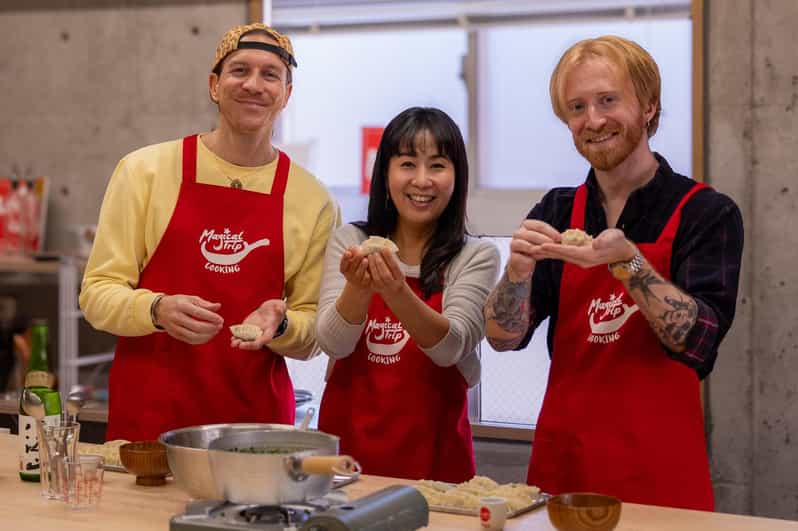
Good food makes Osaka easier to understand. This four-hour class combines a local supermarket visit with hands-on cooking, sake, beer, and conversation in a small studio near Minami Morimachi. I especially like the chance to make niku-sui, okonomiyaki, and gyoza, three dishes that show different sides of Osaka cooking. I also like that the recipes use simple ingredients you can find and prepare at home.
The main thing to consider is the menu’s flexibility. Gluten-free meals are not available, and the kitchen cannot promise allergy-free food because preparation takes place in external kitchens. The class also includes cutting and heating, so it is for participants age 12 and older and may not suit people with mobility difficulties.
In This Review
- Key points at a glance
- Why this Osaka food class feels different
- Starting at the Minami Morimachi supermarket
- Making niku-sui, Osaka’s comforting beef soup
- Getting the okonomiyaki texture right
- Folding gyoza together
- Drinks, lunch, and the pace of the afternoon
- The guides make the biggest difference
- Who should book this experience?
- Practical details before you reserve
- Should you book the Osaka cooking class?
- FAQ
- How long does the Osaka cooking class last?
- What dishes will I make?
- Are drinks included?
- Is the class suitable for beginners?
- Can vegetarians and vegans join?
- Are gluten-free options available?
- Where is the meeting point?
Key points at a glance
- Three Osaka favorites in one class: Make niku-sui beef soup, okonomiyaki, and gyoza rather than simply watching a chef work.
- A real supermarket stop: Shop for the class ingredients and see the everyday products Osaka residents buy.
- Small-group format: With no more than seven participants, you get room to ask questions and help with each dish.
- Three drinks included: Choose alcoholic or non-alcoholic canned drinks, with tea also served during the class.
- Guides add more than recipes: Chie, Eri, Emi, Akko, Ayu, and Linda have all been praised for their warmth, cultural knowledge, and care.
- Useful after the holiday: Recipes are sent after the class, along with photos taken by your guide.
Why this Osaka food class feels different
Many Japanese food classes focus on one specialty, such as sushi, ramen, or wagashi. This one gives you a wider look at Osaka’s home-style table. You make a soup, a savory pancake, and dumplings, so the class covers several cooking methods and textures in one sitting.
That range matters. Niku-sui is a light but flavorful beef soup with a strong connection to Osaka’s local food culture. Okonomiyaki is more familiar to many visitors, but making it yourself shows how much room there is for personal taste. Gyoza adds a social element, since folding and filling dumplings is easier and more fun when everyone is working together.
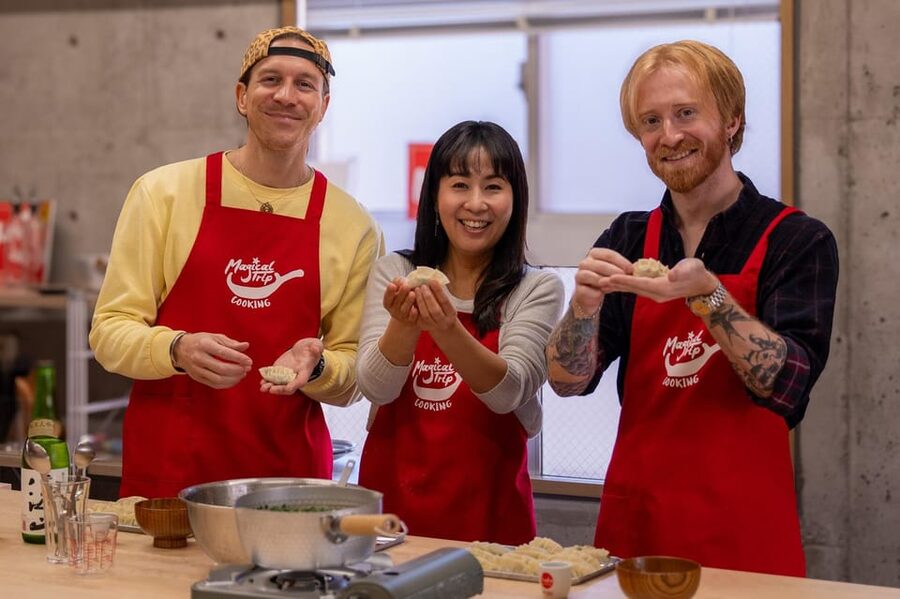
I like the balance between instruction and conversation. You are not expected to stand silently while someone performs a perfect recipe. The guide explains each step, then gives you a chance to chop, mix, fold, cook, and taste. The setting is designed to feel relaxed, and the included drinks give the meal a friendly, informal rhythm.
The class takes place at MagicalTrip’s own cooking studio. That makes the experience more focused than a restaurant meal. You are there to learn, but the mood is not stiff or formal. Several guides have also made the class personal by answering questions about Osaka, Kobe, Japanese regions, food products, and local customs.
More Cooking Classes in Osaka
- Osaka: Ramen and Gyoza Cooking Class in Dotonbori
★ 5.0 · 378 reviews - Osaka Cooking Class: Okonomiyaki &Japanese cuisines experience
★ 5.0 · 261 reviews - Ramen and Gyoza Cooking Class in Osaka
★ 5.0 · 202 reviews
Starting at the Minami Morimachi supermarket
Your meeting point is in front of FamilyMart, about a one-minute walk from Exit 4B of Minami Morimachi Station. This is a useful detail to take seriously. The tour starts on time, and late arrivals cannot join, reschedule, or receive a refund, so allow enough time to find the station exit and meeting spot.
The first part of the class takes you to a local supermarket to buy the ingredients. This is one of the best parts for anyone who wants more than a standard sightseeing stop. Instead of seeing Japanese food only on a restaurant menu, you get to look at the products used in ordinary home cooking.
Your guide handles the shopping while explaining what you are seeing and selecting. The ingredients are fresh, and the visit gives you a quick look at how food shopping works in Osaka. It also makes the later cooking more understandable, since you know where the meal began and what went into it.
The supermarket visit is not a full market tour, so you should not expect a long food crawl or time to shop for souvenirs. Its value is practical and cultural. You see the ingredients before they become lunch, then use them yourself a short time later.
Making niku-sui, Osaka’s comforting beef soup
Niku-sui may be the least familiar dish on the menu, which is exactly why it deserves attention. This beef soup is loved locally, but it is not as internationally famous as okonomiyaki or gyoza. The recipe offers a gentler introduction to Osaka food than a heavily seasoned dish would.
The guide walks you through the preparation step by step. You learn how the ingredients come together in a simple broth and how a few well-chosen items can create a satisfying bowl. The class presents the dish as something you can repeat at home, not as a complicated restaurant secret.
For you, the appeal is twofold. First, it gives you a dish that many people will not have tried before visiting Osaka. Second, it is realistic home cooking. Once you receive the recipe, you can make it without needing advanced knife skills or specialist equipment.
Because the class includes several dishes, the soup is part of a larger meal rather than the entire focus. That is good for variety, though anyone hoping for a very detailed lesson on Japanese soup stock may find the session moves on fairly quickly.
Getting the okonomiyaki texture right
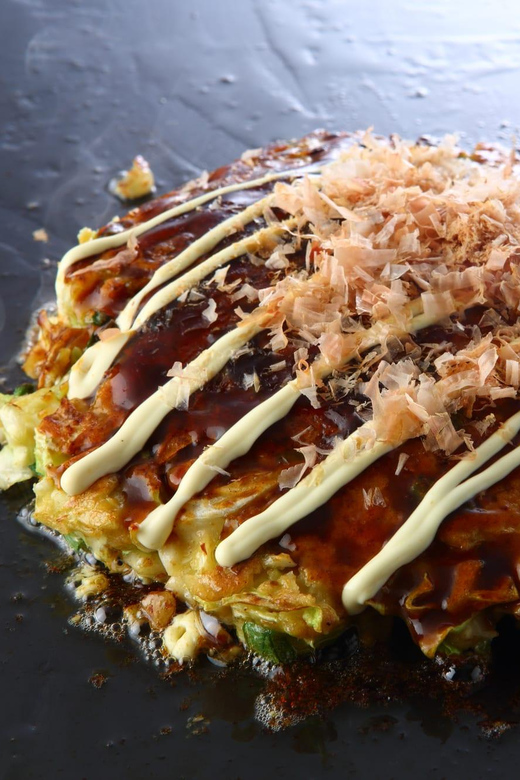
Okonomiyaki is Osaka’s famous savory pancake, and making it yourself is more useful than simply eating one at a restaurant. The dish is flexible by nature, with room for personal variations in ingredients and proportions. That makes it a good classroom recipe because you can understand the basic method without feeling tied to one rigid formula.
The guide explains the process clearly, then helps you prepare and cook your portion. You learn how the ingredients are combined and how the pancake comes together as a complete meal. The class is designed for beginners, so you do not need previous cooking experience.
I like okonomiyaki here because it connects the food to Osaka’s identity while still being easy to repeat at home. It is also a recipe you can adapt for family meals or dinner parties. Once you understand the basic structure, you can experiment with your own additions, provided they fit your dietary needs.
The drawback is that the class cannot offer gluten-free alternatives. Since okonomiyaki commonly relies on flour-based ingredients, anyone avoiding gluten should not book this experience expecting a suitable substitution. Vegetarians and vegans are welcome, but you need to tell the provider about dietary needs or allergies at least one day ahead. Same-day requests cannot be accommodated.
More Food Tours in Osaka
- Osaka: Shinsekai Food Tour with 13-15 Dishes at 5 Eateries
★ 4.8 · 2,204 reviews - Osaka Food Tour: 13 Dishes at 5 Local Eateries
★ 5.0 · 2,149 reviews - Hungry Osaka Street Food Tour:15 Tastings & 3 Drinks with a Local
★ 5.0 · 1,727 reviews - Hungry Osaka Street Food Tour: 15 Dishes & 3 Drinks
★ 4.9 · 694 reviews
Folding gyoza together
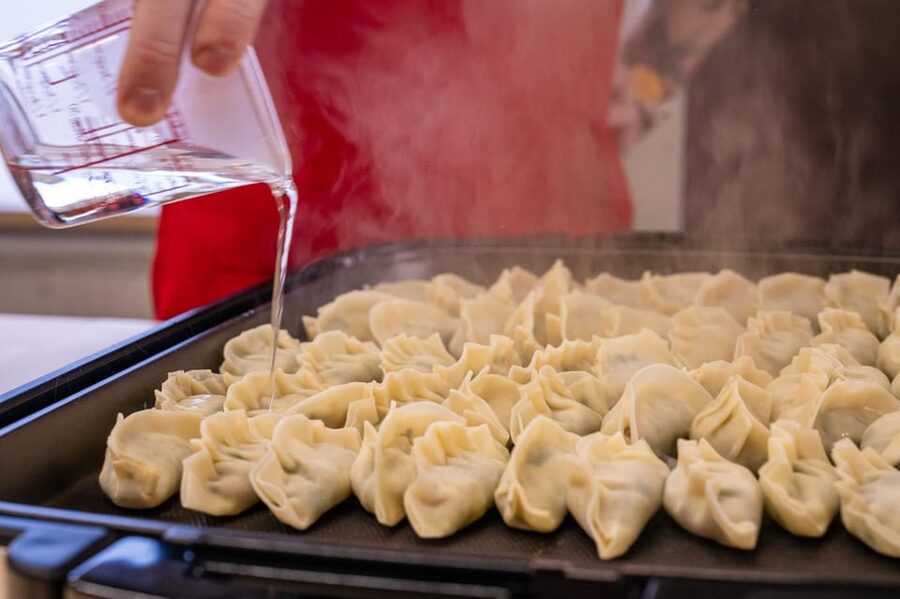
Gyoza brings the most hands-on group energy to the class. You prepare the filling, place it in the wrappers, and fold the dumplings before cooking them. The folding is not just a technical task. It gives you something to do with your hands while chatting, comparing shapes, and laughing at the less-than-perfect results.
That social side is important if you are traveling alone. You do not need to arrive with a ready-made group because the activity naturally creates conversation. Couples, families, and friends can also work together, although the small group means you may share the preparation area with other participants.
The class teaches an approachable method rather than demanding restaurant-level precision. Your dumplings may not all look identical, but the point is to learn a method you can use again. The final result is crispy and juicy, and preparing the food yourself makes lunch feel earned.
Gyoza is also a strong choice for a dinner party at home. The work can be divided among several people, and folding dumplings gives everyone a role. The recipes sent after the class make it easier to repeat the experience once you are back home.
Drinks, lunch, and the pace of the afternoon
The price is $90 per person, and the four-hour session includes the cooking experience, lunch, ingredients, tea, and three canned drinks. Those drinks can be alcoholic or non-alcoholic, so you are not forced to drink alcohol. Sake and beer are available, along with soft drinks.
This is good value if you want a full food activity rather than a quick demonstration. You are paying for a supermarket visit, instruction, ingredients, a meal, drinks, a small group, and time with an English-speaking guide. A restaurant meal alone may cost less, but it would not include the teaching, shopping, recipes, or cultural conversation.
The alcohol is part of the social atmosphere, not the entire point of the class. Some people have especially enjoyed trying sake while cooking, and one guide even went out of her way to help a participant buy additional sake. Still, you can choose non-alcoholic drinks and enjoy the class without drinking.
Expect a substantial meal. The menu includes soup, okonomiyaki, and gyoza, so you should arrive hungry. The pace includes shopping, preparation, cooking, eating, and conversation. It is not ideal if you want to race through several Osaka sights the same afternoon.
The guides make the biggest difference
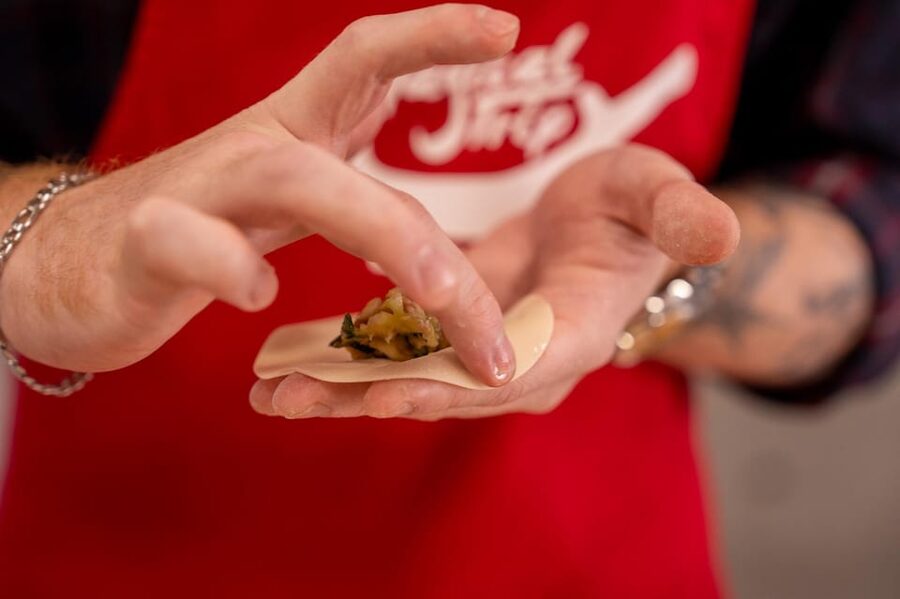
The food matters, but the guide shapes the experience. The class has received especially warm feedback for its hosts, with Chie, Eri, Emi, Akko, Ayu, and Linda all singled out for friendliness and care.
Chie has been praised for making the cooking easy and fun while explaining Japanese history and regional food products. She has also answered questions about different areas of Japan, making her class feel like a food lesson with extra cultural context.
Eri has been described as helpful and relaxed. Her class included background music chosen by the group, which gives you an idea of the informal mood. She also answered questions about Osaka and Japanese culture while offering a broad drink selection.
Emi took time to explain the shopping and the correct methods for all three dishes. Akko created a friendly atmosphere while cooking and eating lunch. Ayu shared tips about Osaka and Kobe, and Linda paid close attention to the group and even added Christmas decorations for a holiday class.
Guide assignments can change, so you should not book solely to meet one particular host. Still, the pattern is clear: the class depends on friendly instruction and conversation, and that is where it has earned its strongest praise.
Who should book this experience?
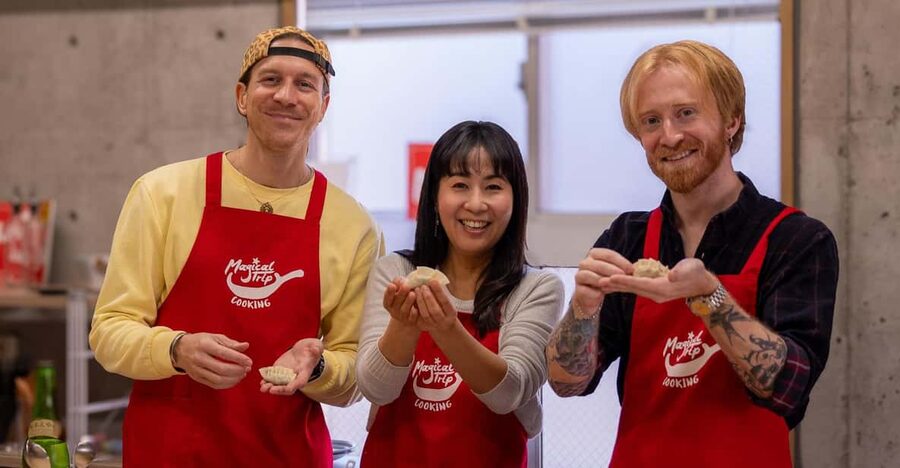
I would recommend this class to you if you want food preparation to be part of your Osaka sightseeing. It suits first-time cooks because the instructions are clear and the recipes are deliberately simple. It also works well for experienced home cooks who want a few Japanese dishes they can repeat without buying unusual equipment.
It is a good fit for:
- Couples who want a shared activity beyond restaurant meals
- Families with children over age 12
- Friends who enjoy cooking and casual drinks
- Solo visitors looking for a social afternoon
- Food fans who want local context along with lunch
- Home cooks who like bringing recipes back from a trip
The class is less suitable if you need gluten-free food, require guaranteed allergy-free preparation, or have difficulty walking and using cooking equipment. Wheelchair and stroller access cannot be guaranteed, and the experience is not recommended for people with mobility issues. A private tour may be a better choice if walking is difficult.
Dress for the season. Osaka can reach about 40 degrees Celsius in summer and fall to around minus 5 degrees Celsius in winter. You will be outside for the supermarket visit, then indoors for cooking, so comfortable clothing suited to the day is the sensible choice.
Practical details before you reserve
The experience lasts four hours and is conducted in English. Group size is limited to seven participants, which is small enough for direct help without making the class feel like a private lesson.
You can cancel up to 24 hours ahead for a full refund, and the reserve-now-pay-later option lets you hold a place without paying immediately. Check the available start times when booking, since the exact schedule can vary.
Tell the provider about dietary needs or allergies at least one day before the class. Vegetarian and vegan participants are welcome, but substitutions are not guaranteed. The kitchen cannot promise allergy-free meals because food is prepared in external kitchens.
Finally, do not cut the timing close. The meeting point is easy to reach once you are at Minami Morimachi Station, but late arrivals are not admitted and do not receive a refund. Arrive early enough to find Exit 4B and the FamilyMart meeting point without stress.
Should you book the Osaka cooking class?
Book it if you want to understand Osaka through everyday food, not just famous restaurant dishes. The supermarket visit, three-dish menu, small group, included drinks, and recipe follow-up create a useful four-hour package for $90.
I would skip it if you need strict gluten-free or allergy-safe cooking, dislike group activities, or have a tight sightseeing schedule. For everyone else, this is a friendly, practical way to spend half a day, with the added reward of taking Osaka’s flavors home in your own cooking.
FAQ
How long does the Osaka cooking class last?
The experience lasts four hours, including the supermarket visit, cooking, lunch, drinks, and time with the guide.
What dishes will I make?
You will make niku-sui beef soup, okonomiyaki, and gyoza.
Are drinks included?
Yes. The experience includes three canned drinks, which can be alcoholic or non-alcoholic. Tea is also served during the class.
Is the class suitable for beginners?
Yes. No cooking experience is required, and the English-speaking guide explains each step clearly.
Can vegetarians and vegans join?
Yes, vegetarians and vegans are welcome. You must provide dietary information or allergy details at least one day before the class.
Are gluten-free options available?
No. Gluten-free options are not available.
Where is the meeting point?
Meet in front of FamilyMart, about a one-minute walk from Exit 4B of Minami Morimachi Station.
More Sake Tastings
- Osaka Sake Tasting with Takoyaki Cooking
★ 5.0 · 156 reviews - Osaka Sake Tasting & Takoyaki Cooking Experience
★ 5.0 · 149 reviews - Osaka Cooking Class and Sake Tasting with Local Supermarket Visit
★ 5.0 · 79 reviews - Kyoto Night Foodie Tour in Gion (9+ dishes + 6 Sake tastings)
★ 5.0 · 1,762 reviews
More Market Tours in Osaka
- Kuromon Market Food Walking Tour in Osaka (6 stops, 6 tastes)
★ 5.0 · 550 reviews - Osaka: Kuromon Market Food Walking Tour (6 stops, 6 tastes)
★ 4.6 · 272 reviews - Kuromon Market Tour: All inclusive 6~8 Dishes & 3~4 samplings
★ 5.0 · 103 reviews
Just added around Osaka
- Osaka Food Tour with 10 Classic Japanese Tastings & Drinks★ 5.0 · 38 reviews
- Osaka: Highlights & Hidden Gems Private Walking Tour★ 4.7 · 38 reviews
- Kyoto private tour (Shore excursion available from Osaka or Kobe port)★ 5.0 · 39 reviews
- Osaka Private Day Trip – Enjoy Your First-Time Visit to Osaka!★ 5.0 · 39 reviews
- Kyoto & Nara & Uji: Full Day Sightseeing Tour from Osaka or Kyoto★ 4.5 · 39 reviews
- Authentic SUSHI Course Cooking Class★ 5.0 · 39 reviews
- Osaka: Mind & Spirit Balance Temple Reiki Healing★ 5.0 · 41 reviews
- Osaka: Gluten-Free Ramen and Gyoza Cooking Class★ 5.0 · 42 reviews
Cooking Classes, compared.
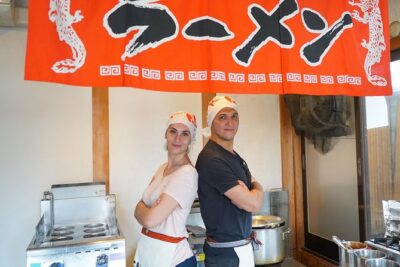
Ramen Cooking Class at Ramen Factory in Kyoto
Read our review →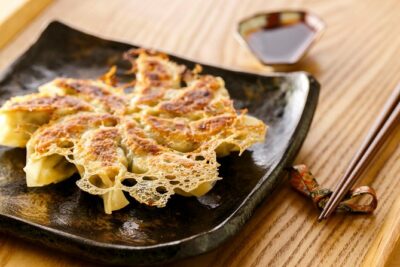
Ramen & Gyoza Cooking Class in Tokyo with Local Supermarket Visit
Read our review →
Ramen Cooking Class at a Ramen Factory with Souvenir
Read our review →
Japanese Washoku Bento Small Group Cooking Class
Read our review →

Easy Ramen Cooking Experience in Kabukicho, Shinjuku
Read our review →
Ramen and Sushi Cooking Class with Sake Pairing Set in Tokyo
Read our review →Browse the lists this tour appears in