
Reviewed · TEA CEREMONY EXPERIENCES
Kyoto: Traditional Tea Ceremony with Matcha & Sweets in Gion
Quiet tea, clear lessons, Kyoto charm. This Gion tea ceremony offers a friendly way to learn about matcha without the stiff rules that can make formal Japanese arts feel intimidating. I like the chair seating, which lets you focus on the ceremony instead of worrying about your knees, and I like the chance to make your own bowl with tea from a family-run farm. The main consideration is timing: the session may last from one hour to 150 minutes, and the meeting point can change depending on the option you book.
I also appreciate the balance between watching and doing. You first see a tea master perform the refined movements, then taste traditional sweets and prepare matcha yourself. English instruction, a question-and-answer period, and a simple recipe to take home make this more useful than a quick photo stop in a pretty room.
In This Review
- Key points to know before you book
- A calm introduction to Kyoto tea culture
- What happens during the 60 to 150 minutes
- Watching the tea master before making your own
- The sweets are part of the lesson
- Why chair seating changes the experience
- The tea, the farm, and the take-home recipe
- Timing, group size, and the kimono option
- Who will enjoy this most
- Booking value and practical flexibility
- Should you book this Gion tea ceremony?
- FAQ
- Where does the tea ceremony take place?
- How much does the experience cost?
- How long does the tea ceremony last?
- Is the instruction available in English?
- Do I sit on the floor?
- Do I make my own matcha?
- What kind of tea is used?
- Are Japanese sweets included?
- Can children participate?
- What happens with the kimono option?
Key points to know before you book
- Chair seating in Gion: You can enjoy the ceremony without sitting on the floor, a practical choice for anyone with limited mobility or stiff knees.
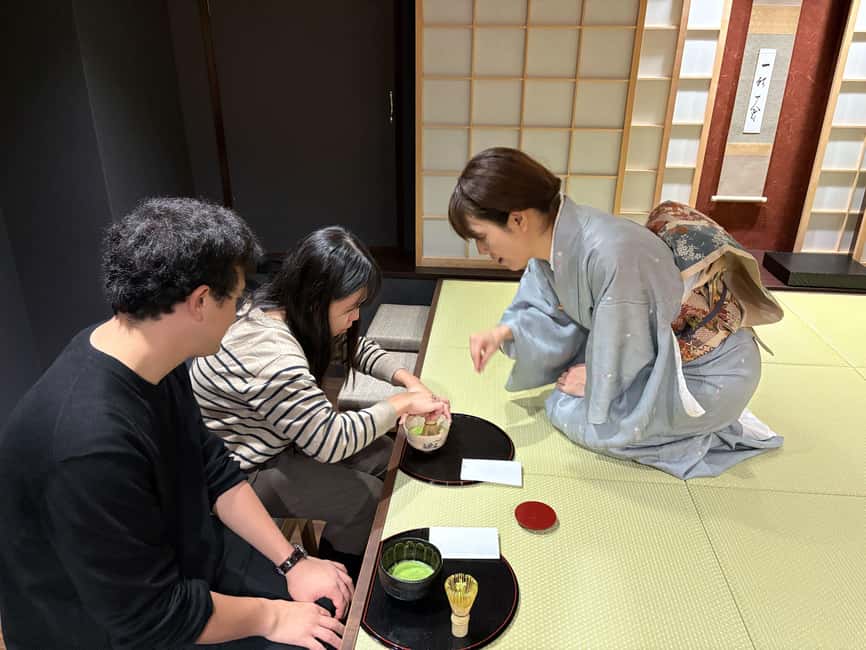
- Watch, then whisk: A tea master demonstrates the ceremony before you prepare your own bowl of matcha.
- Tea from a family-run farm: Your drink uses matcha sourced directly from a local tea farm.
- Sweets chosen by the tea master: Traditional Japanese confections accompany the tea and help explain how the ceremony is enjoyed.
- Relaxed English instruction: The tone is friendly rather than strict, with time for questions at the end.
- Optional kimono arrangement: If you choose the kimono option, the rental and ceremony times are linked, so you need to follow the assigned schedule carefully.
A calm introduction to Kyoto tea culture
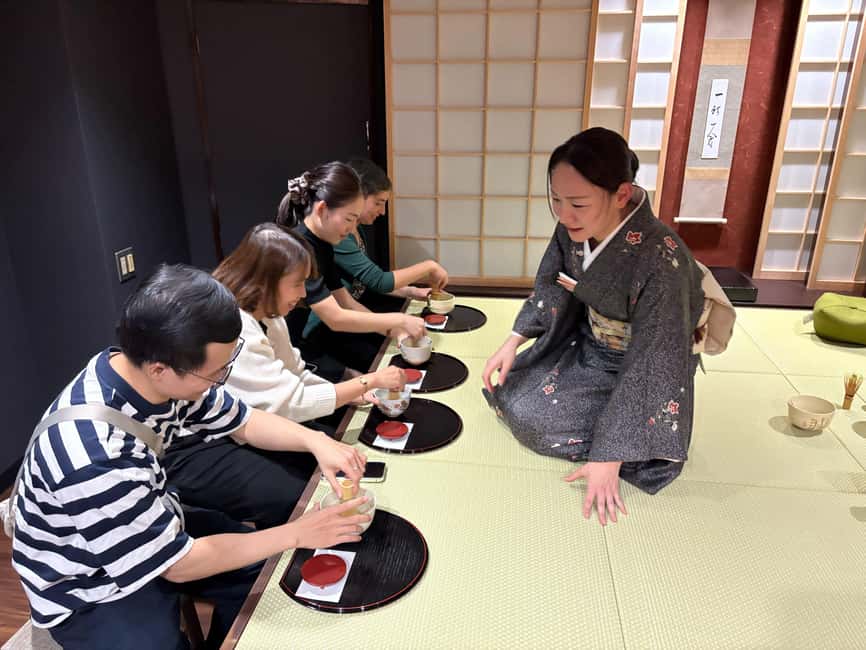
Kyoto’s Gion district is a natural setting for a tea ceremony. The area is known for its traditional streets and long connection with Japanese arts, but this activity does not ask you to pretend you are entering a centuries-old formal gathering. Instead, it gives you a clear, comfortable introduction to the ideas behind tea.
That distinction matters. A full traditional tea ceremony can involve detailed etiquette, floor seating, prescribed movements, and a level of silence that may leave a first-time participant unsure of what to do. Here, the goal is to explain the practice while keeping the mood open and approachable.
I would choose this activity if you want more than a quick cup of matcha but do not want a highly formal cultural lesson. You get the atmosphere, the history, the visual beauty, and the hands-on part without needing prior knowledge.
The setting is described as calm and elegant, with the quiet hospitality associated with Japanese tea. Since the meeting point varies by booking option, check your confirmation closely before setting out. That small step matters in Gion, where nearby streets can look similar and your day may already include other reservations.
More Dessert Tours in Kyoto
- Kyoto: Japanese Traditional Sweets Making and Tea Ceremony
★ 4.4 · 314 reviews - Kyoto Wagashi(Japanese sweets) Cooking Class near Fushimiinari
★ 5.0 · 60 reviews - Kyoto: Wagashi (Japanese sweets) Cooking near Fushimiinari
★ 5.0 · 40 reviews
What happens during the 60 to 150 minutes
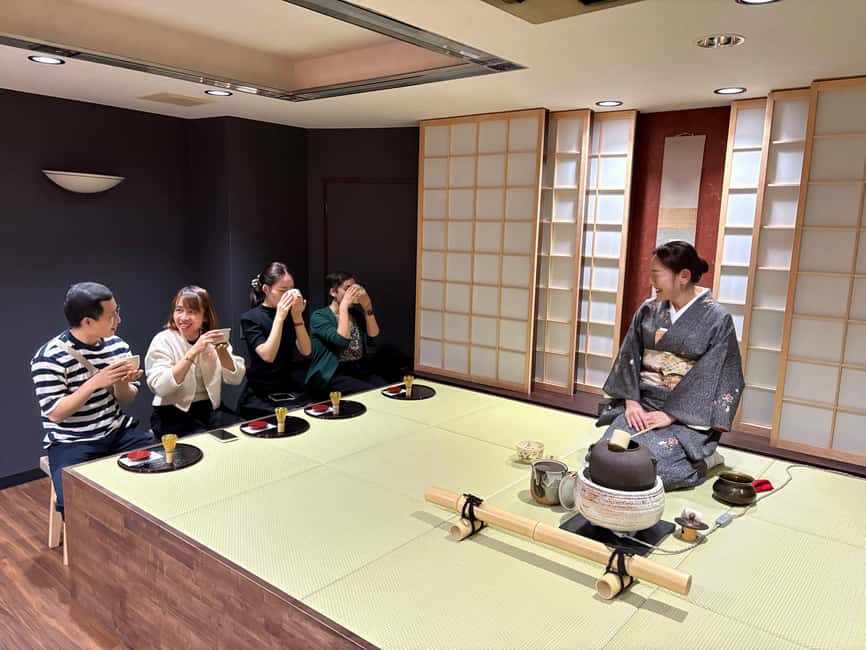
The exact length depends on the session, with options ranging from one hour to 150 minutes. That is a wide range, so check the available starting times and the duration attached to your chosen option. A shorter visit may suit a packed sightseeing day, while the longer version gives you more room for questions and explanation.
The session begins with an introduction to tea and the tea ceremony. You learn how matcha fits into Japanese culture and how Zen thought has influenced the practice. This background gives meaning to the quiet gestures you are about to see. Without it, the ceremony could look like a series of elegant movements with no clear purpose.
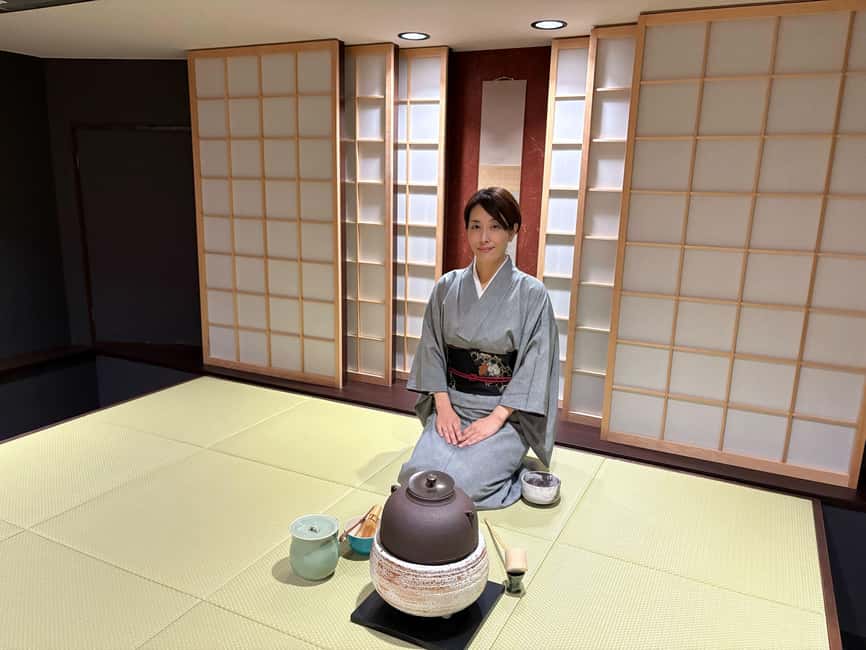
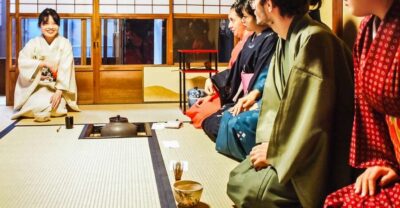
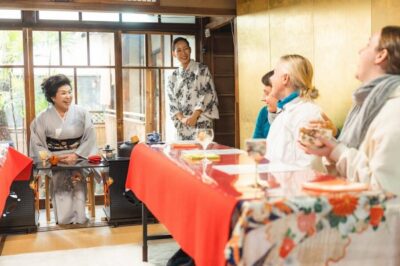
Then the tea master performs the ceremony close to the group. Watch the handling of the bowl, the preparation of the tea, and the measured pace of the work. The value here is not just visual. You are seeing details that are hard to notice in a large demonstration or a performance made mainly for photographs.
The mood stays casual and friendly. You are not expected to master every rule or sit in solemn silence for the whole session. The instructor explains what is happening and helps you understand the respect, attention, and calm that shape the ceremony.
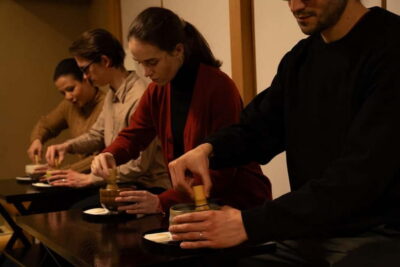
The second half changes from watching to participation. You taste traditional Japanese sweets selected by the tea master, then make your own bowl of matcha. This order is part of the appeal. The sweets prepare your palate for the bitter, grassy flavor of the tea, while the preparation gives you a direct connection to the process.
At the end, you can ask questions. That Q&A is especially useful if you are curious about matcha outside the ceremony, including how the tea is made, why the movements matter, or how to prepare it at home.
Watching the tea master before making your own
The demonstration is the most polished part of the session. A tea master shows authentic techniques up close, giving you a chance to notice the care in each motion. The presentation is not treated as a mysterious performance. Instead, the instructor explains the ideas behind the gestures and the place of tea in Japanese life.
One recent participant specifically praised Mai for her warmth and clear explanations. That fits the tone of the activity: approachable instruction seems to be a major strength. You do not need to know the correct way to hold a bowl before arriving, and you can ask for clarification without feeling out of place.
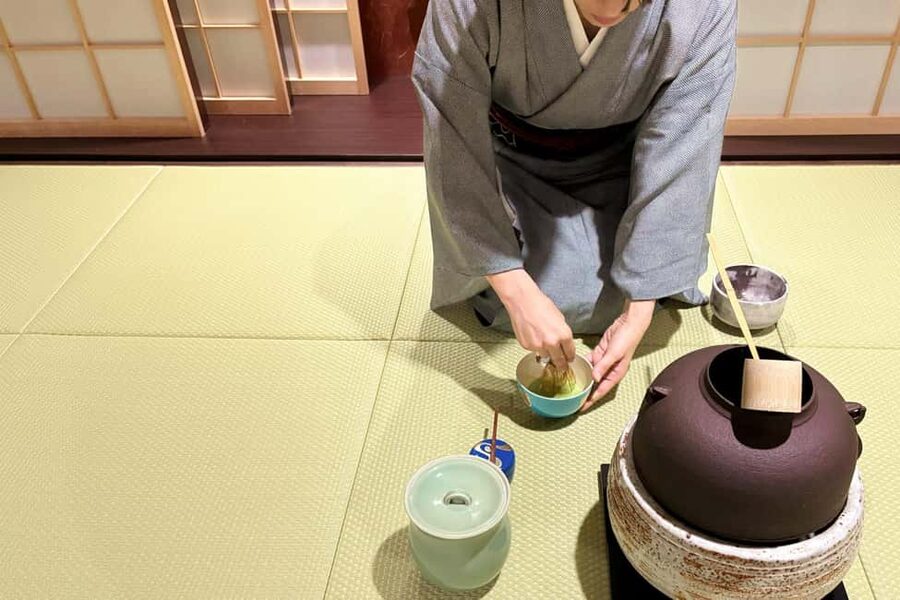
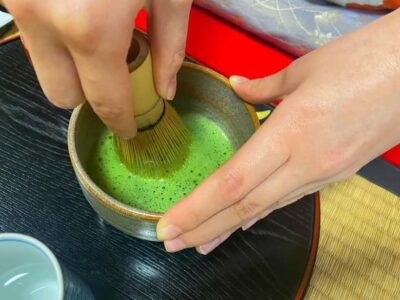
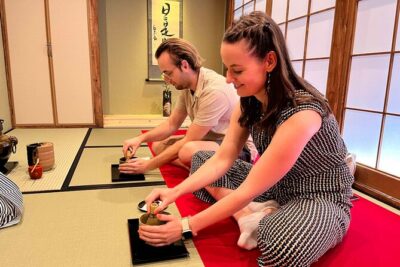
The demonstration also gives you a useful point of comparison for your own attempt. When it is your turn, you may not produce a bowl that looks as polished as the tea master’s. That is fine. The point is to feel the whisk in your hand, see the powder change texture, and understand why the preparation requires attention.
Matcha is made by whisking powdered tea with hot water until it becomes frothy. One participant described the pleasure of watching the bubbles form after learning how to mix quality matcha properly. You will get a simple introduction rather than a professional tea-school lesson, but that is enough to make the drink less mysterious.
The sweets are part of the lesson
The Japanese sweets are not an extra snack added at the last minute. They are selected for the tea ceremony by the tea master and help balance matcha’s strong flavor. Traditional sweets can be delicate in taste and appearance, so this part adds another small window into Japanese food culture.
Expect the sweets to be served as part of the ceremony rather than as a large dessert course. If you have a strong sweet tooth, keep your expectations modest. The value lies in how the confection and tea work together, not in the size of the serving.
I like this pairing because it slows the activity down. You are not simply handed a drink and sent on your way. You taste, observe, and then prepare the tea yourself. That sequence makes the session feel like a lesson with a beginning, middle, and end.
The sweets also help first-time matcha drinkers. Straight matcha can taste intense if you are used to sweetened café drinks. Having a traditional confection alongside it gives you a more balanced first encounter.
More Tea Ceremonies in Kyoto
- Kyoto: Tea Ceremony in a Traditional Tea House in Kiyomizu
★ 4.9 · 3,519 reviews - Kyoto: Tea Ceremony Ju-An at Jotokuji Temple
★ 4.9 · 3,207 reviews - Kyoto: 45-Minute Tea Ceremony Lesson Experience
★ 4.3 · 2,378 reviews - Kyoto: Table-Style Tea Ceremony at a Kyo-Machiya
★ 4.9 · 1,211 reviews
Why chair seating changes the experience
The chair arrangement is one of the most practical features here. Traditional ceremonies often use tatami mats and floor seating, which can be difficult for anyone with limited mobility, knee trouble, or little experience sitting that way.
You still see the ceremony in a traditional setting, but you do not have to trade comfort for cultural access. Parents, older participants, and anyone who simply prefers a chair can take part more easily.
This choice may disappoint someone seeking the full formal tatami-room ritual. If your main goal is strict historical reenactment, this is not that. It is an adapted presentation designed to make the art understandable and comfortable for a wider range of people.
For most first-time visitors, I see the chair seating as a sensible compromise. You can pay attention to the tea master, take part in the hands-on portion, and enjoy the atmosphere without physical discomfort becoming the main story.
The tea, the farm, and the take-home recipe
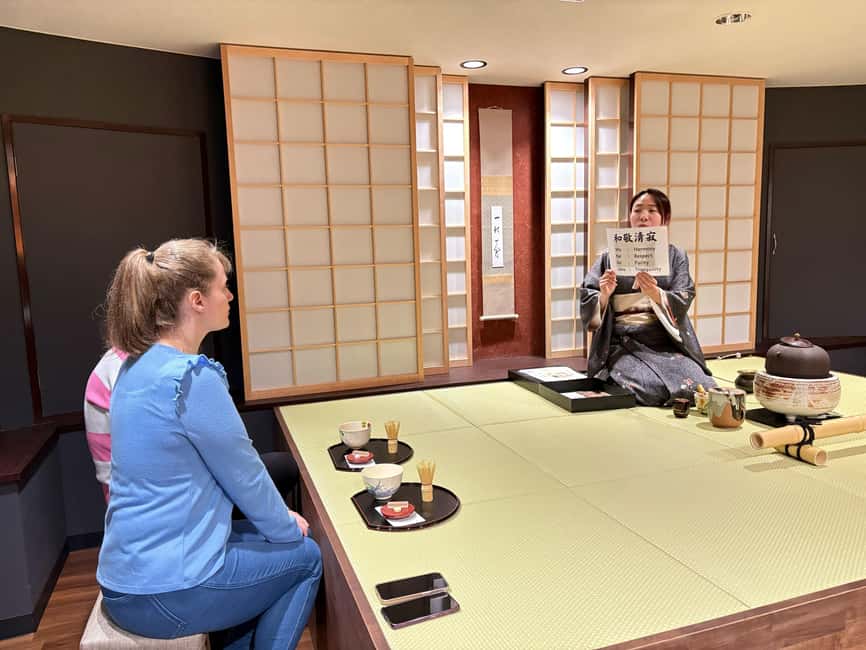
Your matcha comes from a local tea farm, described as a family-run source. That detail gives the hands-on portion more substance. You are not only practicing with a generic powder chosen for convenience. You are tasting a product connected to a specific tea-growing tradition.
The activity also includes guidance for making matcha in daily life. You receive a simple recipe so you can repeat the drink after returning home. Do not expect a full course in tea preparation or a list of specialized equipment. The recipe is intended as an easy starting point.
That makes the $22 price more useful than a basic tasting. You receive instruction, sweets, a drink, a cultural explanation, and a practical skill you can try again. For someone already planning to visit Gion, it is a modest-cost way to add structure and meaning to an afternoon.
The value is strongest if you participate fully. If you only want to watch a ceremony, you may find the hands-on portion less important. If you like learning by doing, the price is easier to justify.
Timing, group size, and the kimono option
Small-group availability should make it easier to follow the demonstration and ask questions. The exact group size is not specified, so do not assume an intimate private lesson. Still, the format is designed for personal guidance rather than a large stage show.
The instruction is in English. That is important because the historical and Zen background forms a large part of the activity. You are not simply watching silent movements. You are given explanations that help connect the ceremony to Japanese culture.
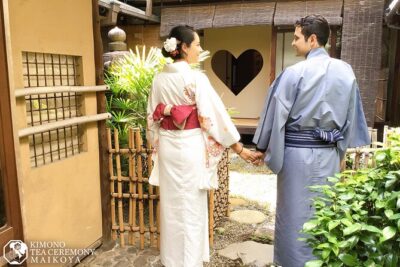
The kimono option needs extra planning. You first go to the Kimono Rental Wargo Gion store, located on the fifth floor, change there, and then walk to the tea ceremony meeting point yourself. You are asked to arrive 10 minutes before the ceremony begins.
The tea time is fixed by the kimono start time:
- An 11:00 kimono start leads to the 12:30 tea ceremony.
- A 12:00 kimono start leads to the 14:00 tea ceremony.
- A 14:00 kimono start leads to the 15:30 tea ceremony.
After the activity, the kimono must be returned by 5:30 p.m. This option can add a memorable visual element to your Gion visit, but it also makes your day less flexible. Build in enough time to change, walk to the meeting point, attend the ceremony, and return the clothing on schedule.
If you do not need a kimono, the standard tea ceremony is simpler. You avoid the rental timetable and can focus on the tea itself.
Who will enjoy this most
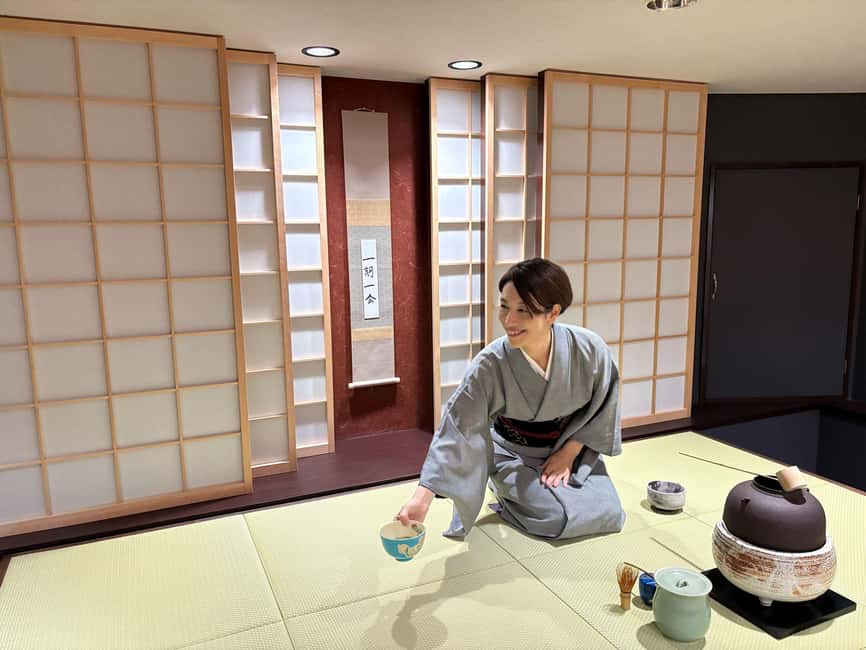
I would recommend this activity to first-time visitors who want a gentle introduction to Japanese tea. It suits couples, families with older children, solo visitors, and anyone interested in food, craft, or cultural tradition.
It is also a good choice for people who cannot sit comfortably on the floor. Chair seating removes a common obstacle without removing the core parts of the experience.
Parents should note that infants and toddlers are free, but children who want to try making tea must use a parent or guardian’s cup. They do not receive their own matcha to prepare. Matcha contains caffeine and is not recommended for children under five.
You may want something else if you have already studied tea ceremony in depth or want a strict, highly formal ritual. The friendly tone is a strength for most people, but it means the session is an introduction rather than advanced training.
Booking value and practical flexibility
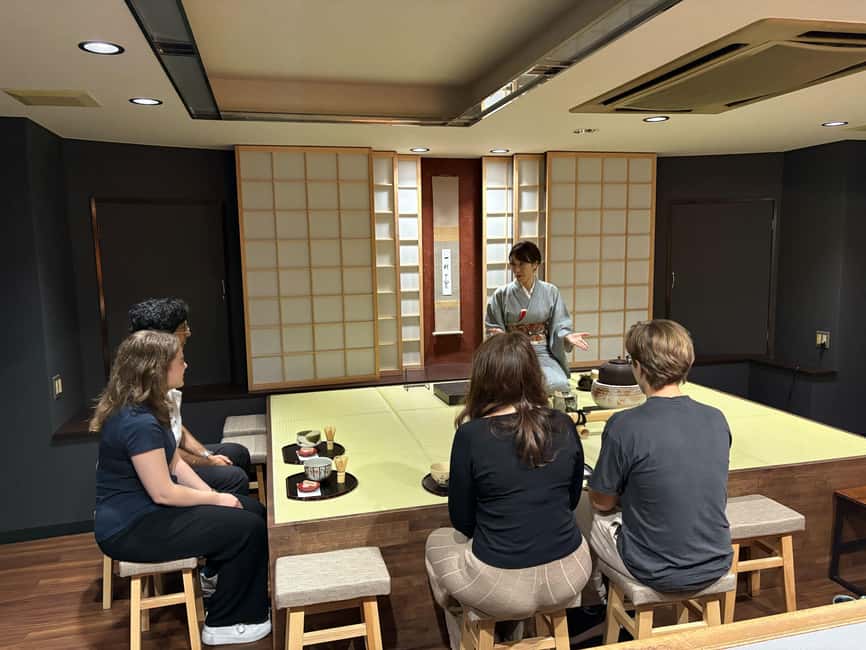
At $22 per person, this is reasonably priced for a cultural activity in central Kyoto. You receive a guided demonstration, historical background, traditional sweets, your own matcha-making attempt, tea from a local farm, and a recipe to use later.
The flexible booking terms also help when planning a busy Kyoto day. You can reserve now and pay later, and cancellation is allowed up to 24 hours before the activity for a full refund. Availability and starting times still need checking, especially during crowded travel periods.
Remember that the meeting point may vary by option. The tea ceremony itself is in Gion, but do not rely on a general map pin or assume the kimono rental store is the ceremony location.
The strongest value comes from the combination of comfort and participation. You are not paying only for a short demonstration. You are getting an explanation, a tasting, and a basic skill that can continue at home.
Should you book this Gion tea ceremony?
Book it if you want a relaxed, well-explained first look at matcha and Japanese tea culture. The chair seating, English guidance, local tea, traditional sweets, and chance to prepare your own bowl make it easy to recommend for most first-time visitors.
Choose the standard option if you want a straightforward cultural stop. Choose the kimono option only if you are comfortable following a fixed schedule and returning the rental by 5:30 p.m.
Skip it if you want a fully formal ceremony with floor seating and strict etiquette. For everyone else, this is a friendly and fairly priced way to slow down in Gion, learn something real, and leave with a recipe you can use after Kyoto.
FAQ
Where does the tea ceremony take place?
The activity takes place in Kyoto’s historic Gion district. The precise meeting point may vary depending on the option you book, so check your booking information.
How much does the experience cost?
The listed price is $22 per person.
How long does the tea ceremony last?
Available sessions range from one hour to 150 minutes. Check the booking calendar for the exact duration and starting time.
Is the instruction available in English?
Yes. The instructor provides English guidance.
Do I sit on the floor?
No. The tea ceremony uses chairs rather than floor seating, making it easier for people who are uncomfortable sitting on tatami or have limited mobility.
Do I make my own matcha?
Yes. After watching the tea master, you receive guidance for making your own bowl of matcha.
What kind of tea is used?
The matcha is sourced from a local, family-run tea farm.
Are Japanese sweets included?
Yes. Traditional Japanese sweets selected by the tea master are included with the tea ceremony.
Can children participate?
Infants and toddlers are free of charge. If they want to try making tea, they must use a parent or guardian’s cup and will not receive their own matcha to prepare. Matcha is not recommended for children under five because it contains caffeine.
What happens with the kimono option?
You go first to the Kimono Rental Wargo Gion store, change into the kimono, and then walk to the tea ceremony meeting point. You must arrive 10 minutes before the ceremony. The tea time depends on the kimono start time, and the kimono must be returned by 5:30 p.m.
More Geisha & Gion District Tours
- Kyoto Geisha Walking Tour: Gion District & Hidden Gems
★ 4.7 · 3,273 reviews - Kyoto: Gion Magical Night Walking Tour with Geisha Trivia
★ 4.9 · 2,393 reviews - Kyoto: Gion Geisha District Walking Tour – Stories of Geisha
★ 4.7 · 2,187 reviews - Best of Kyoto: Gion, Geisha, Pagodas & Cobblestones
★ 4.9 · 2,058 reviews
Just added around Kyoto
- Kyoto: Private Customizable Day Trip by Car★ 5.0 · 38 reviews
- Kyoto: Gion Night Walking Tour with Geisha Insight★ 5.0 · 39 reviews
- Kyoto: Full Day Bike Tour★ 4.9 · 39 reviews
- Private Japanese Calligraphy in Kyoto – Learn Shodō with a Master★ 5.0 · 39 reviews
- Experience a tea ceremony in an authentic tearoom, in Kyoto!★ 4.5 · 41 reviews
- Kyoto: Gion Evening Walk with Hidden Gems, Geisha & Sake★ 5.0 · 41 reviews
- Kyoto Private Photo Shoot & Tour by SnapKyoto★ 5.0 · 41 reviews
- The Way of Tea: Kyoto Crafts, Hidden Temples & Wabi-Sabi Walk★ 5.0 · 41 reviews
Tea Ceremony Experiences, compared.
Tea Ceremony in a Traditional Tea House in Kiyomizu
Read our review →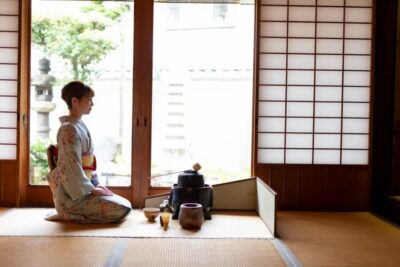
Browse the lists this tour appears in